
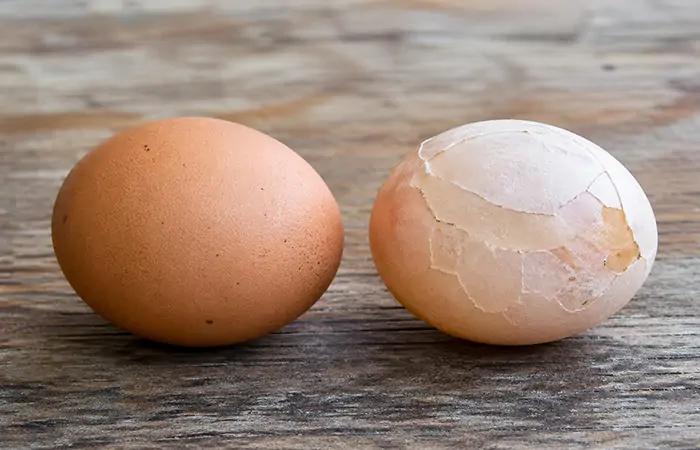
Thin-shell eggs, soft-shell eggs, or even shell-less eggs are among the most common and frustrating problems in layer farming. Whether you manage a backyard flock or a commercial poultry house, this issue signals that something in nutrition, environment, age, or health is out of balance.
This guide explains why chickens lay thin-shell eggs, how the eggshell is formed, and step-by-step practical methods to correct and prevent the problem in both small and large-scale operations.
What Is a Thin-shell or Soft-shell Egg?
A normal eggshell is hard, smooth, and composed of nearly 95% calcium carbonate. When hens produce:
- Thin shells that crack easily
- Soft, rubber-like shells
- Wrinkled shells
- Eggs without shells (only membrane)
it means the shell formation process inside the hen is disturbed.
These eggs are not only fragile and unsellable, but also a clear early warning of management or nutritional deficiency.
How a Chicken Forms an Eggshell (Why Problems Start Here)
Understanding this process is critical.
After ovulation, the egg travels through the oviduct:
- Albumen (egg white) forms
- Membranes form
- The egg stays 18–20 hours in the shell gland (uterus) where calcium is deposited
- The hard shell is built
This final stage requires:
- High levels of calcium
- Proper vitamin D3 for calcium absorption
- Correct phosphorus balance
- A stress-free environment
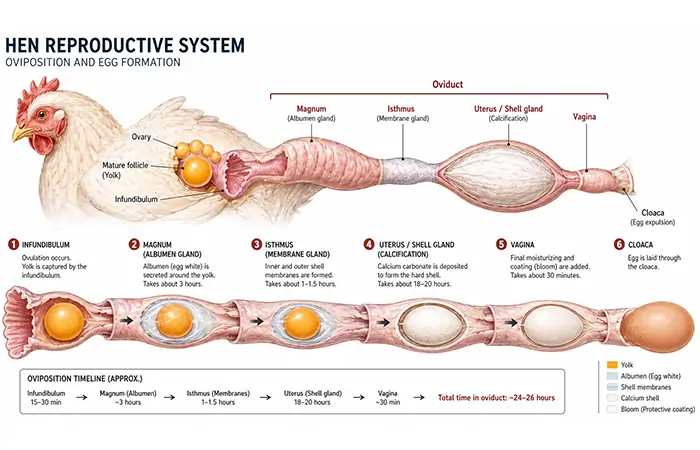
If any of these are insufficient, the hen cannot complete shell formation, resulting in thin or soft shells.
Main Reasons Chickens Lay Thin-shell Eggs
1) Calcium Deficiency — The Most Common Cause
Even when feed “contains calcium,” hens may still be deficient because:
- Calcium particles are too fine and pass too quickly
- Lack of free-choice calcium sources (oyster shell / limestone grit)
- High production hens consume more calcium than expected
Best practice:
- Provide oyster shell or limestone grit separately
- Use coarse calcium particles (2–4 mm) for slow release at night (when shells form)
- Ensure layer feed contains 3.5–4.2% calcium
2) Vitamin D3 Deficiency — The Hidden Cause
Without vitamin D3, hens cannot absorb calcium, no matter how much is provided.
Common in:
- Indoor cage systems with no sunlight
- Poor premix formulation
- Old feed losing vitamin potency
Solution: Use a reliable vitamin premix and ensure correct D3 levels in layer diets.
3) Age Factor — Young and Old Hens
- Young hens (first weeks of laying) often produce small or soft eggs as their system matures
- Old hens lose shell gland efficiency and lay thinner shells
This is natural but can be minimized with optimized nutrition and management.
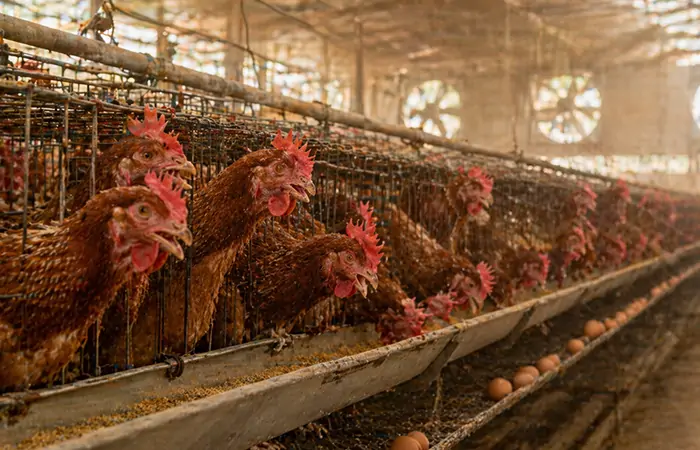
4) Heat Stress and Poor Ventilation
High temperatures reduce feed intake. Less feed = less calcium intake.
In poorly ventilated poultry houses, hens experience:
- Heat stress
- Reduced appetite
- Electrolyte imbalance
This quickly leads to shell quality problems.
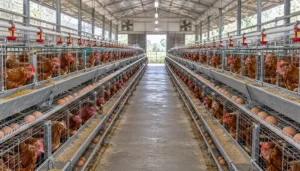
Good ventilation and cage design directly improve shell quality.
5) Stress and Sudden Changes
Moving hens, loud noise, overcrowding, or lighting changes interrupt the shell formation cycle.
6) Disease Affecting the Shell Gland
Diseases such as infectious bronchitis can damage the shell gland, leading to persistent thin shells across the flock.
Signs Your Chicken Is About to Lay Soft or Shell-less Eggs
Early indicators include:
- Hens straining longer in nest boxes
- Eggs breaking easily during collection
- Wrinkled shells
- Drop in eggshell color and hardness
- Increased egg breakage rate
Early detection allows fast correction.
Are Soft-shell Eggs Painful for Chickens?
Yes. Laying soft or shell-less eggs is uncomfortable because:
- The egg lacks rigidity
- The hen must strain harder
- Risk of egg binding increases
This is not only a production issue but also a welfare concern.
How to Prevent Thin-shell Eggs (Practical Step-by-Step)
Step 1 — Correct Calcium Supplement Plan
- Provide oyster shell or limestone grit free-choice
- Use coarse calcium particles
- Avoid relying only on compound feed calcium
You can also bake and crush eggshells as a temporary supplement for small flocks.
Step 2 — Improve Housing, Ventilation, and Cage Design
Proper poultry housing ensures:
- Lower heat stress
- Better feed intake
- Reduced hen stress
- Stable laying cycles
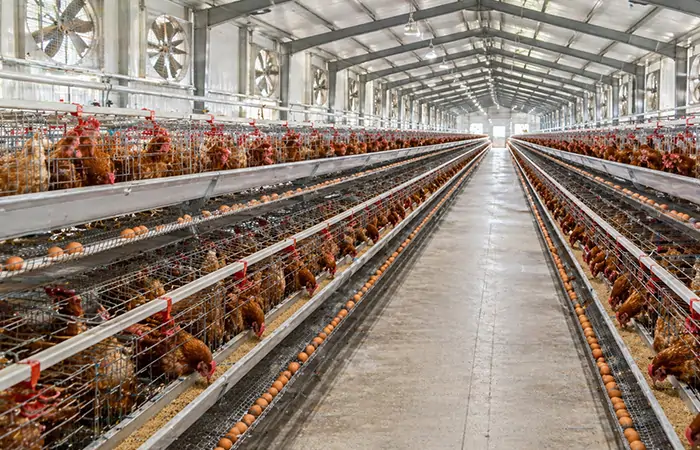
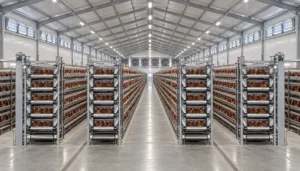
Well-designed layer cage systems with effective airflow significantly reduce thin-shell problems in commercial farms.
Step 3 — Proper Lighting Program
Inconsistent lighting disrupts laying rhythm and shell formation.
Maintain:
- 14–16 hours stable light daily
- No sudden light changes
Step 4 — Temperature and Stress Management
Ideal temperature for layers: 18–24°C (64–75°F).
Use ventilation, cooling pads, or fans in hot climates.
Can You Feed Chickens Eggshells?
Yes, with proper preparation:
- Wash eggshells
- Bake at 120°C (250°F) for 10 minutes
- Crush into small pieces
- Offer as calcium supplement
This is suitable for backyard flocks but not a replacement for professional calcium sources in large farms.
Why Chickens Lay Small Eggs, Fairy Eggs, or Eggs Without Yolk
These are often seen in:
- Young hens starting to lay
- Reproductive system adjustment
- Stress or disturbance in ovulation
They are usually temporary and not a major concern.
FAQ
Why does my chicken lay eggs with no shell?
Calcium or vitamin D3 deficiency, or shell gland disturbance.
Do chickens need oyster shell?
Yes, especially laying hens.
Why are my chicken eggs so small?
Young age or nutritional imbalance.
Do hens lay unfertilized eggs?
Yes. Roosters are not required for egg production.
When do chickens stop laying eggs?
Production decreases significantly after 2 years of age.
Final Checklist: Fix Thin-shell Eggs in 7 Days
- Add oyster shell or limestone grit immediately
- Check vitamin premix quality
- Improve ventilation and reduce heat stress
- Stabilize lighting hours
- Reduce flock stress
- Monitor feed intake
- Observe improvement in shell hardness within one week
Conclusion
Thin-shell eggs are not random. They are a clear management signal. With correct calcium supplementation, proper vitamin balance, good housing conditions, and reduced stress, shell quality can be restored quickly.
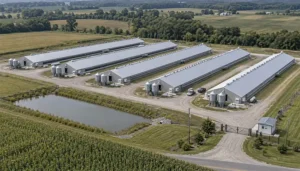
For commercial poultry farms, housing design, ventilation efficiency, and cage systems play a crucial role in preventing recurring shell problems and maintaining high egg quality throughout the laying cycle.
 EN
EN  ES
ES  FR
FR  AR
AR  PT
PT  DE
DE