
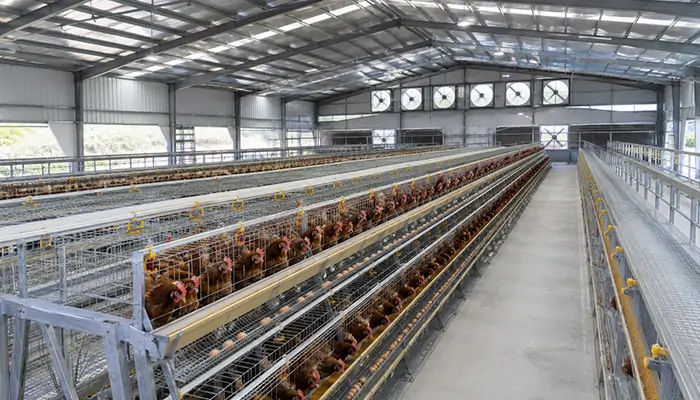
Building a chicken house is one of the most important investments in modern poultry farming. Whether you are planning a small poultry shed or a large commercial poultry farm, the design and construction of the poultry house directly affect:
- Bird health
- Egg production
- Feed conversion ratio
- Labor efficiency
- Disease control
- Farm profitability
A poorly designed chicken house can lead to ventilation problems, heat stress, high mortality rates, and expensive maintenance costs. On the other hand, a well-planned poultry house improves production performance and creates a stable environment for layers or broilers.
In this guide, we explain the 7 most important factors affecting poultry house construction and how to build an efficient chicken housing system for long-term success.
What is a Chicken House?
A chicken house, also called a poultry house or poultry building, is a structure designed to provide chickens with a safe, controlled, and productive environment.
Modern poultry housing systems are designed to support:
- Feeding
- Drinking
- Ventilation
- Egg collection
- Waste removal
- Lighting management
- Temperature control
Depending on production goals, chicken houses are generally divided into:
- Layer chicken houses
- Broiler chicken houses
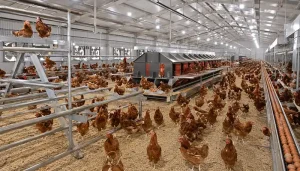
- Cage-free poultry houses
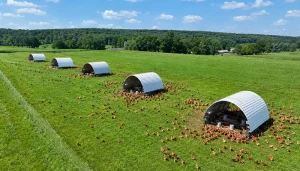
- Small backyard poultry houses
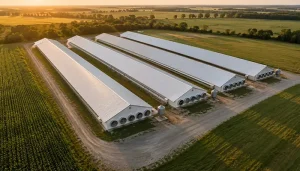
- Commercial automated poultry farms
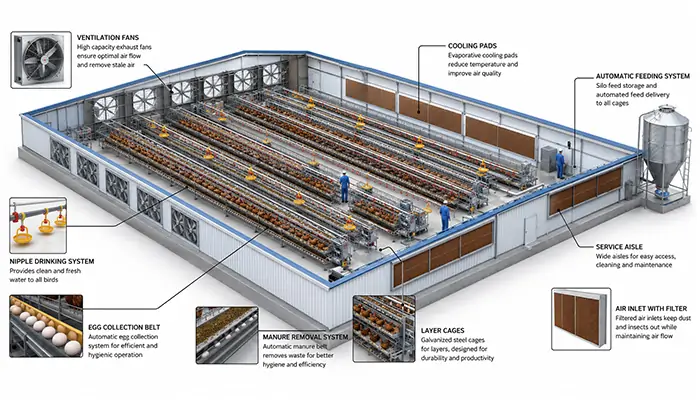
Commercial poultry buildings usually integrate automated feeding systems, nipple drinking systems, ventilation fans, cooling pads, and manure removal systems to improve productivity and reduce labor costs.
Factor 1: Choosing the Right Location for Poultry House Construction
Selecting the proper location is the foundation of successful poultry farm construction.
A poor site location can create serious long-term problems including flooding, disease spread, poor ventilation, and transportation difficulties.
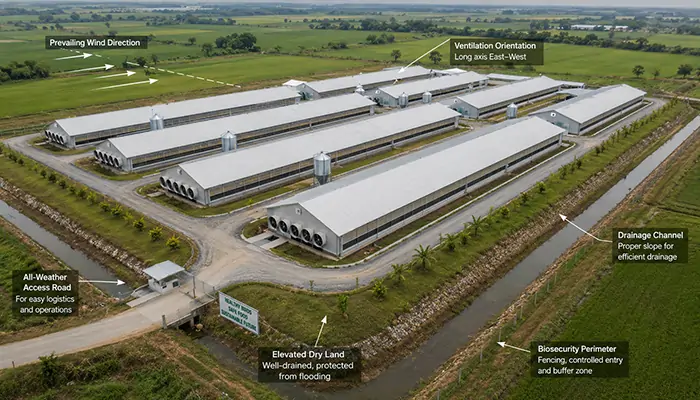
Key Site Selection Considerations
Elevated Ground and Drainage
The poultry house should be built on elevated land with good drainage to prevent water accumulation during heavy rain.
Excess moisture increases the risk of:
- Bacterial growth
- Ammonia buildup
- Disease outbreaks
- Structural damage
Distance from Residential Areas
Chicken farms should be located away from residential zones to reduce odor complaints and improve farm biosecurity.
Transportation Access
Good road access is essential for:
- Feed delivery
- Egg transportation
- Equipment installation
- Farm management
Water and Electricity Supply
Reliable utilities are necessary for ventilation systems, automatic feeding equipment, and lighting systems.
Factor 2: Chicken House Design and Layout
The internal design of the chicken house directly affects bird comfort and farm efficiency.
A well-designed poultry house improves:
- Air circulation
- Worker movement
- Equipment operation
- Production performance
Open-Sided vs Closed Poultry Houses
Open Poultry House
Advantages:
- Lower construction cost
- Natural ventilation
- Suitable for warm climates
Closed Poultry House
Advantages:
- Better environmental control
- Higher production efficiency
- Improved biosecurity
- Suitable for large commercial farms
Poultry House Orientation
The building should be positioned according to local wind direction and sunlight conditions to maximize airflow and reduce heat stress.
Space Planning
Overcrowding causes:
- Aggressive behavior
- Disease transmission
- Lower egg production
- Poor feed conversion
Proper bird density is critical for both broilers and layers.
Factor 3: Poultry House Dimensions and Structural Strength
The structural quality of the chicken house determines durability, safety, and long-term maintenance costs.
Chicken House Dimensions
The dimensions of a poultry house depend on:
- Number of birds
- Housing system
- Climate conditions
- Ventilation design
Commercial layer houses are typically long, narrow structures that allow efficient airflow.
Steel Structure and Roof Truss Design
Modern poultry houses commonly use galvanized steel structures because they offer:
- High strength
- Corrosion resistance
- Long service life
- Fast installation
Roof trusses must be strong enough to withstand:
- Wind loads
- Rain pressure
- Snow loads in cold regions
Roofing Materials
Common poultry house roofing materials include:
- Corrugated galvanized roofing sheets
- Color coated roofing sheets
- Insulated sandwich panels
Proper roofing reduces heat transfer and improves internal temperature stability.
Factor 4: Ventilation and Temperature Control
Ventilation is one of the most important factors in poultry farming.
Poor airflow leads to:
- Heat stress
- High humidity
- Ammonia accumulation
- Respiratory disease
- Reduced egg production
Natural Ventilation
Open-sided poultry houses use curtains and natural wind flow to maintain air movement.
Mechanical Ventilation
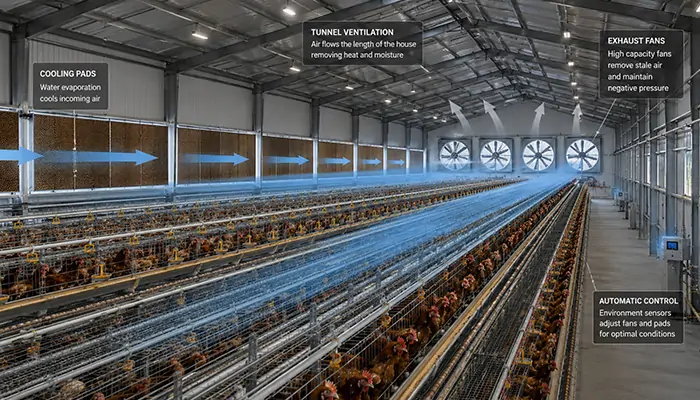
Large poultry farms often use:
- Exhaust fans
- Air inlets
- Tunnel ventilation systems
- Cooling pads
These systems help maintain stable temperatures even in hot climates.
Broiler vs Layer Ventilation Needs
Broilers generate more body heat because of rapid growth, while layer houses require stable airflow for continuous egg production.
Factor 5: Choosing the Right Poultry Housing System
Different poultry housing systems are suitable for different farm sizes and production goals.
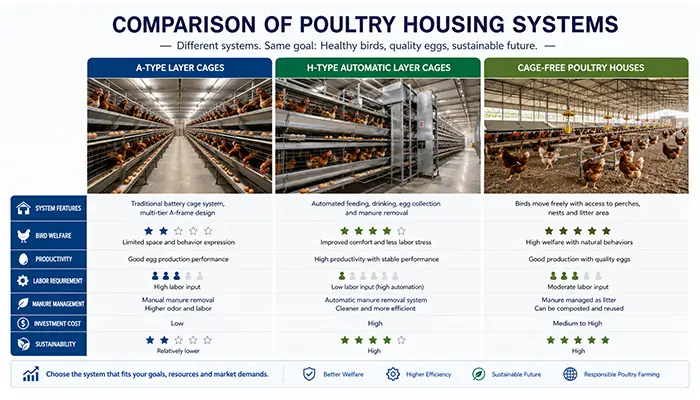
A-Type Layer Cage System
Advantages:
- Lower investment cost
- Easy management
- Suitable for small and medium farms
H-Type Layer Cage System
Advantages:
- High automation
- Large production capacity
- Better space utilization
- Reduced labor requirements
Cage-Free Poultry System
Advantages:
- Higher animal welfare standards
- Growing market demand
- Suitable for premium egg production
Floor Raising System
Advantages:
- Flexible operation
- Lower equipment investment
- Simple management
Choosing the right housing system depends on:
- Farm budget
- Labor availability
- Production target
- Local market demand
Factor 6: Lighting, Feeding and Water Systems
Modern poultry production relies heavily on automated systems.
Lighting System
Lighting directly affects:
- Egg laying cycles
- Bird activity
- Feed intake
Layer farms often use programmable lighting systems to improve egg production efficiency.
Feeding System
Automatic feeding systems help:
- Reduce labor costs
- Minimize feed waste
- Improve feeding uniformity
Drinking System
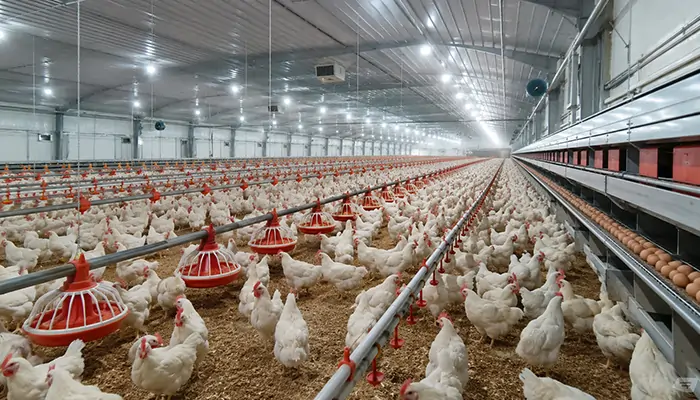
Nipple drinking systems are widely used because they:
- Keep water clean
- Reduce disease risk
- Lower water waste
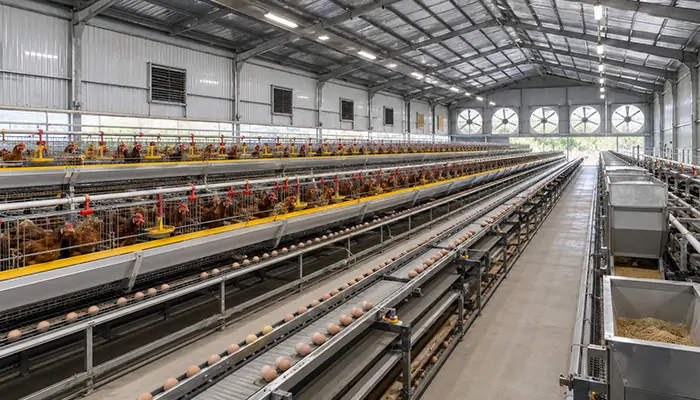
Egg Collection System
Commercial layer farms commonly use automatic egg collection belts to improve efficiency and reduce egg damage.
Factor 7: Budget, Materials and Long-Term Maintenance
Building a poultry house is a long-term investment, so material quality and maintenance planning are extremely important.
Choosing Durable Materials
High-quality materials reduce future repair costs and extend service life.
Recommended materials include:
- Galvanized steel structures
- Corrosion-resistant poultry cages
- Durable roofing sheets
- High-quality ventilation equipment
Maintenance Accessibility
The poultry house should be designed for easy cleaning and equipment maintenance.
This improves:
- Biosecurity
- Operational efficiency
- Long-term farm management
Automation vs Initial Investment
Automated poultry systems require higher initial investment but significantly reduce labor costs and improve productivity over time.
Step-by-Step Process of Building a Chicken House
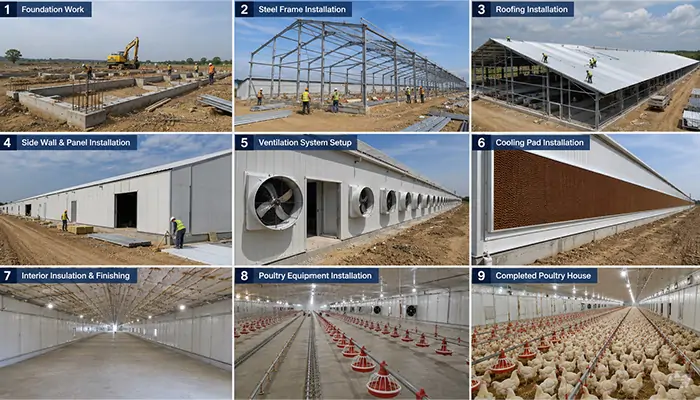
Step 1 — Site Preparation
- Land leveling
- Drainage planning
- Utility access
Step 2 — Foundation Construction
- Concrete foundation
- Structural support preparation
Step 3 — Steel Structure Installation
- Columns
- Roof trusses
- Framing system
Step 4 — Roofing and Wall Installation
- Roofing sheets
- Sidewall systems
- Insulation installation
Step 5 — Ventilation and Electrical Systems
- Fans
- Cooling pads
- Lighting systems
- Electrical wiring
Step 6 — Poultry Equipment Installation
- Chicken cages
- Feeding lines
- Drinking systems
- Egg collection systems
Step 7 — Cleaning and Disinfection
Before introducing birds, the poultry house must be fully disinfected to ensure proper biosecurity.
Common Mistakes in Poultry House Construction
Many poultry farms experience production problems because of poor planning.
Common mistakes include:
- Poor ventilation design
- Weak drainage systems
- Incorrect bird density
- Cheap roofing materials
- Inadequate biosecurity planning
- Insufficient insulation
- Poor equipment layout
Avoiding these mistakes can greatly improve farm profitability.
How to Build a Small Chicken House for Beginners
Small poultry houses are ideal for beginners or small-scale farmers.
A simple chicken house should include:
- Basic ventilation
- Dry flooring
- Predator protection
- Feeding and drinking access
- Easy cleaning access
For low-cost poultry housing, many small farms use:
- Galvanized wire mesh
- Steel pipe frames
- Corrugated roofing sheets
Simple poultry house designs are easier to manage and expand later.
Conclusion
Building a successful chicken house requires careful planning, quality materials, and proper environmental control.
The right poultry house design improves:
- Bird welfare
- Production performance
- Labor efficiency
- Disease prevention
- Long-term profitability
Whether you are planning a small poultry shed or a fully automated commercial poultry farm, investing in proper poultry house construction is essential for sustainable poultry production.
FAQ
What is the best design for a poultry house?
The best poultry house design depends on climate, farm size, and production goals. Closed automated poultry houses are commonly used for large commercial farms.
How much space do chickens need in a poultry house?
Space requirements vary depending on whether the birds are broilers, layers, or cage-free chickens.
What is the ideal ventilation system for a chicken house?
Tunnel ventilation systems with cooling pads and exhaust fans are widely used in commercial poultry farms.
How do you build a low-cost chicken house?
Using simple steel structures, galvanized wire mesh, and natural ventilation can reduce poultry house construction costs.
What materials are commonly used in poultry house construction?
Common materials include galvanized steel structures, roofing sheets, wire mesh, concrete flooring, and poultry cage systems.
What is the difference between a broiler house and a layer house?
Broiler houses are designed for meat production, while layer houses are optimized for egg production and egg collection systems.
 EN
EN  ES
ES  FR
FR  AR
AR  PT
PT  DE
DE