
Consumers see the words “cage free eggs” on cartons everywhere—but very few people truly understand what the label guarantees, what it does not, and how it differs from “caged,” “free range,” or “organic.” For egg buyers, retailers, and poultry farmers, this distinction matters. It affects purchasing decisions, farm design, animal welfare compliance, and long-term market access.
This guide explains the real definition of cage free eggs, clears up common confusion, and shows how cage-free production systems work in modern poultry houses.
What Are Cage Free Eggs? (Definition & Meaning)
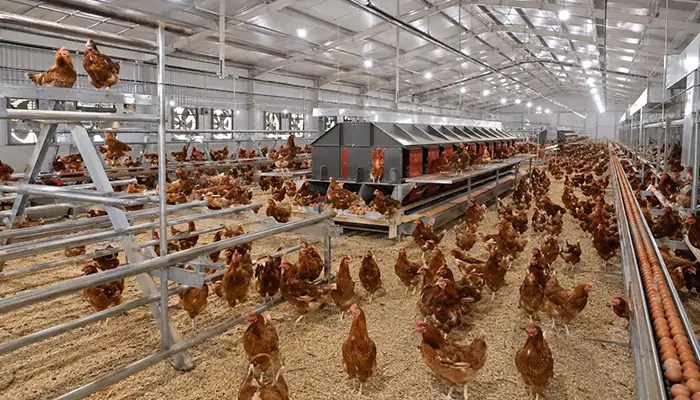
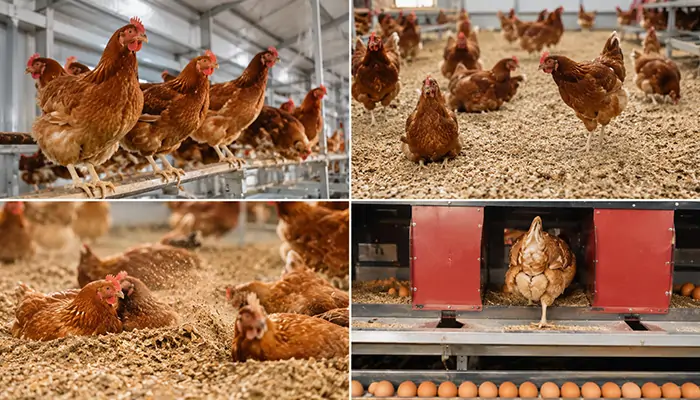
Cage free eggs come from hens that are not kept in battery cages. Instead, hens live inside an open barn, aviary, or floor system where they can:
- Walk freely
- Spread their wings
- Perch and rest
- Lay eggs in nest boxes
- Access feed and water without cage restriction
What cage free does NOT mean:
- It does not guarantee outdoor access
- It does not mean organic feed
- It does not automatically mean better nutrition
Cage free is strictly a housing system definition.
What Does “Cage Free” Mean for the Chicken?
In a cage-free house, hens live in a shared indoor environment designed to allow natural behaviors.
Typical features include:
- Litter floor for scratching and dust bathing
- Perches and elevated platforms
- Centralized nest boxes
- Automated feeding and watering lines
- Egg collection belts
- Manure removal systems
The focus is freedom of movement and behavioral welfare, not outdoor grazing.
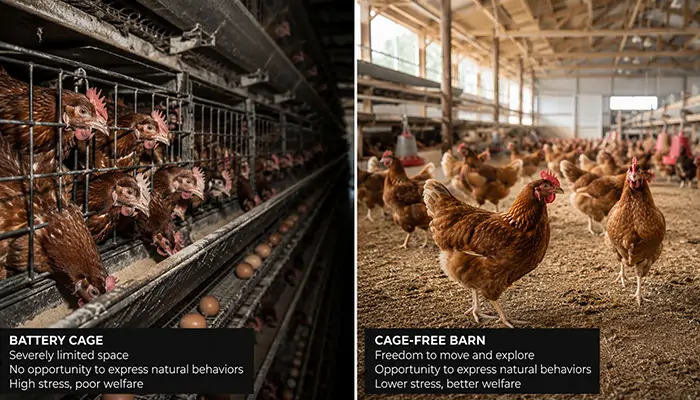
Cage Free Eggs vs Regular (Caged) Eggs
| Aspect | Cage (Battery) System | Cage Free System |
|---|---|---|
| Hen movement | Restricted to cage | Free movement in barn |
| Natural behaviors | Limited | Perching, walking, nesting |
| Space per bird | Very small | Significantly larger shared area |
| Equipment layout | Tiered metal cages | Open floor / aviary structure |
| Animal welfare perception | Low | High |
| Production efficiency | Very high | Moderate |
| Egg cost | Lower | Higher |
This difference is why retailers and consumers increasingly prefer cage free eggs.
Cage Free Eggs vs Organic Eggs (Common Confusion)
Many people think cage free and organic are the same. They are not.
| Label | Refers To |
|---|---|
| Cage Free | Housing system |
| Organic | Feed and farming inputs |
| Free Range | Outdoor access |
| Humane Certified | Welfare audit standard |
Eggs can be Organic + Cage Free at the same time.
Are Cage Free Eggs Better, Safer, or Healthier?
Nutritionally, cage free eggs are almost identical to caged eggs.
The real differences are:
- Animal welfare
- Consumer perception
- Retail and restaurant purchasing standards
- Brand and ethical value
The higher price reflects production cost and welfare value, not major nutrition changes.
Why More Farms Are Switching to Cage Free Systems
Global retailers, supermarkets, and restaurant chains are committing to cage-free sourcing policies. Welfare certifications and buyer requirements are accelerating this shift.
For farms, staying competitive increasingly means being able to supply cage free eggs.
How Cage Free Eggs Are Produced (Farm Setup Explained)
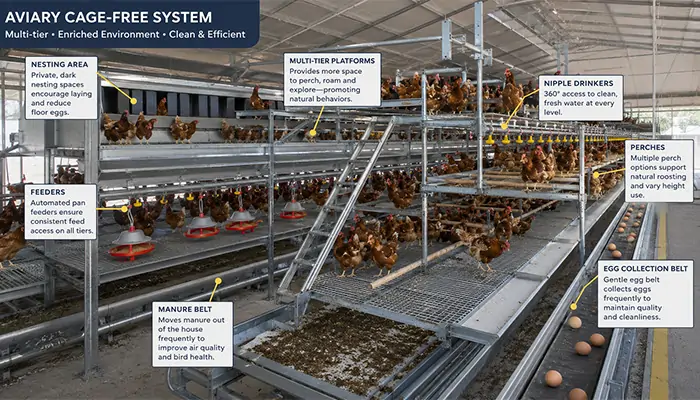
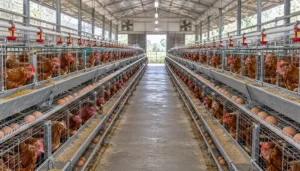
A modern cage-free poultry house typically includes:
- Multi-tier aviary or single-level floor system
- Central nest boxes connected to egg belts
- Automatic feeding lines
- Nipple drinker systems
- Manure belt or scraper removal
- Environmental control and ventilation
These systems are engineered to maintain hygiene, egg cleanliness, and flock health while allowing freedom of movement.
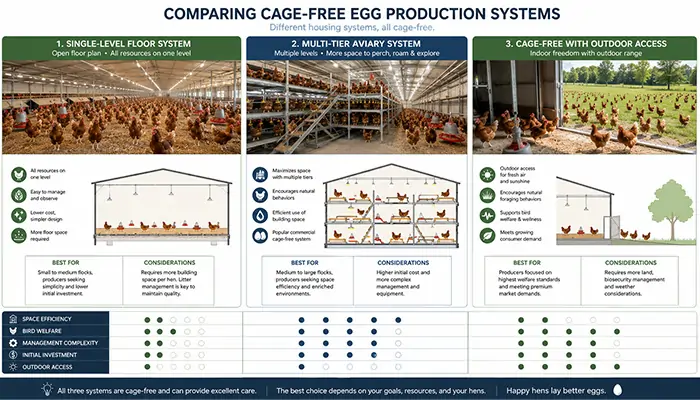
Types of Cage Free Egg Production Systems
- Single-Level Floor System
- Birds live on litter floor
- Simple layout, lower investment
- Suitable for small to medium farms
- Multi-Tier Aviary System
- Vertical space utilization
- Perches, platforms, nest modules
- Higher bird capacity, better space efficiency
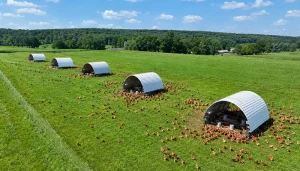
- With Outdoor Access (Free Range Combination)
- Barn + outdoor yard
- Higher welfare perception
- Requires more land and management
The Simple Truth About Cage Free Eggs (Myth vs Fact)
Myth: Cage free hens live outdoors
Fact: Most are indoor barn-raised
Myth: Cage free eggs are much healthier
Fact: Nutrition difference is minimal
Myth: Cage free farming is easy
Fact: It requires more management and better equipment
Myth: All cage free farms are the same
Fact: System design determines success
What Labels Like “Cage Free”, “Free Range”, “Organic”, and “Humane Certified” Really Mean
Understanding labels helps buyers and farms align with market demand:
- Cage Free → housing freedom
- Free Range → outdoor access
- Organic → certified feed standard
- Humane Certified → audited welfare compliance
These labels often stack together depending on farm design.
Why Egg Buyers and Supermarkets Prefer Cage Free Eggs
Retailers prefer cage free eggs because:
- Consumers associate them with better welfare
- They support ethical sourcing policies
- They future-proof supply chains against regulation
- They strengthen brand image
This is why cage free is becoming a procurement requirement, not a niche product.
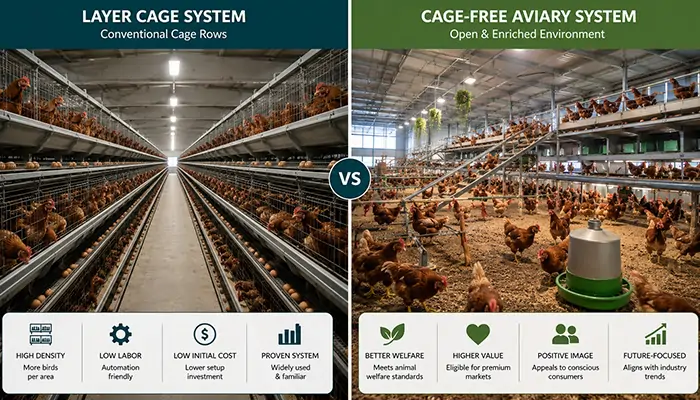
For Poultry Farmers: Cage Free System vs Layer Cage System (Which Should You Choose?)
| Factor | Layer Cage System | Cage Free System |
|---|---|---|
| Investment | Lower | Higher |
| Labor | Lower | Higher |
| Welfare perception | Low | High |
| Market price of eggs | Standard | Premium |
| Buyer acceptance | Declining | Increasing |
| Management difficulty | Easier | More complex |
Farms targeting premium markets, retailers, or export buyers are increasingly adopting cage free aviary systems.
Conclusion
Cage free eggs are not about nutrition—they are about housing, welfare, and market demand.
Understanding what the label really means helps:
- Consumers make informed choices
- Retailers meet sourcing policies
- Farms select the right production system
- Equipment suppliers design better poultry houses
As global demand shifts toward welfare-friendly production, cage free systems are becoming the future standard of egg farming.
 EN
EN  ES
ES  FR
FR  AR
AR  PT
PT  DE
DE