
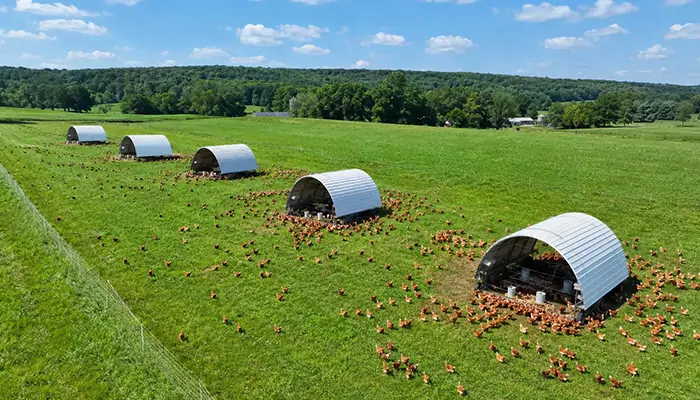
Consumer demand for ethically raised poultry products has grown significantly over the last decade. More consumers are actively seeking pasture-raised chicken and eggs because they value animal welfare, sustainability, and product quality. As a result, small-scale pastured poultry farming has become an attractive opportunity for new farmers, homesteaders, and agricultural entrepreneurs.
Unlike conventional poultry production systems, pastured poultry allows chickens to access fresh grass, insects, and sunlight while reducing dependence on intensive confinement facilities. With relatively low startup costs and flexible scaling options, a pasture-based poultry operation can generate strong returns when managed correctly.
Whether you’re planning a small chicken farm with a few hundred birds or looking to develop a commercial pasture-raised poultry business, this guide covers everything from land requirements and housing design to feeding strategies and profitability.
What Is a Pastured Poultry Operation?
A pastured poultry operation is a livestock farming system where chickens are raised outdoors on grass-covered pasture and regularly moved to fresh grazing areas.
Unlike conventional poultry houses where birds remain indoors throughout their lives, pastured chickens spend most of their time foraging naturally while receiving supplemental feed.
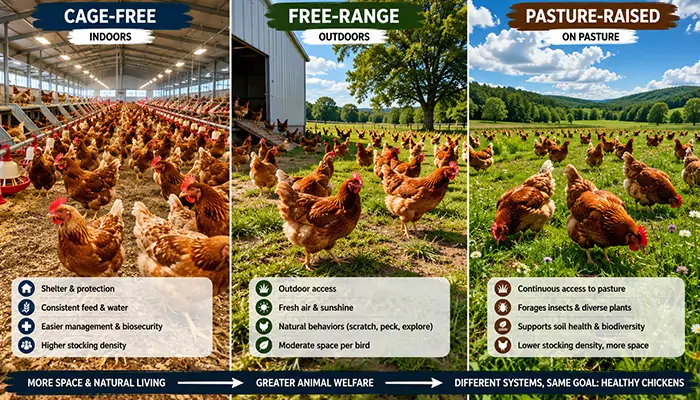
Difference Between Pasture-Raised, Free-Range, and Cage-Free
Many consumers confuse these production methods.
| System | Outdoor Access | Grazing Opportunity | Space Allocation |
|---|---|---|---|
| Cage-Free | No | No | Moderate |
| Free-Range | Limited | Sometimes | Varies |
| Pasture-Raised | Extensive | Yes | High |
Pasture-raised poultry systems offer the greatest access to natural environments and typically command premium market prices.
Benefits of Pastured Poultry
- Improved animal welfare
- Better soil fertility through manure distribution
- Reduced parasite pressure through rotation
- Higher market value
- Enhanced farm sustainability
- Greater consumer trust
Why Start a Small-Scale Pastured Poultry Farm?
Pastured poultry is one of the most accessible livestock enterprises for beginning farmers.
Compared with cattle, sheep, or swine operations, poultry requires:
- Less land
- Lower startup capital
- Faster production cycles
- Quicker cash flow
- Easier management
Broiler chickens can reach market weight in as little as 8–12 weeks, allowing multiple production cycles annually.
For entrepreneurs interested in agricultural diversification, pasture-raised poultry can complement vegetable production, orchards, cattle grazing systems, and regenerative agriculture practices.
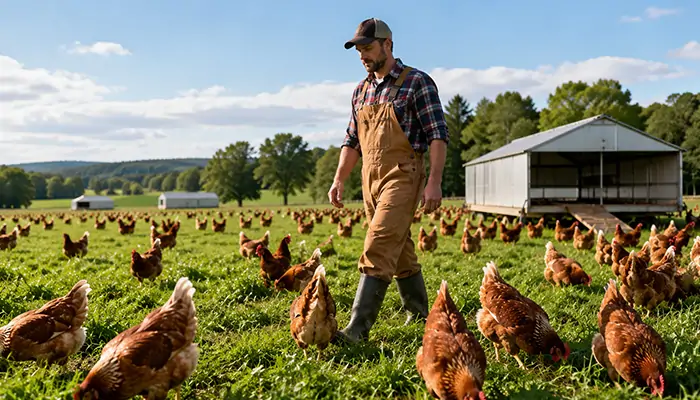
Is Pastured Poultry Profitable?
One of the most common questions from new chicken farmers is whether a small-scale poultry operation can generate meaningful income.
The answer depends on several factors:
- Production efficiency
- Feed costs
- Mortality rates
- Local demand
- Marketing channels
- Processing expenses
Revenue Sources
Successful poultry farms often combine multiple income streams:
Pasture-Raised Meat Chickens
Premium poultry meat often sells for significantly more than conventionally raised chicken.
Farm-Fresh Eggs
Layer flocks can provide consistent weekly income.
Fertilized Eggs
Breeding operations can sell hatching eggs.
Day-Old Chicks
Some farms generate revenue through chick sales.
Value-Added Products
Examples include:
- Smoked chicken
- Poultry sausages
- Prepared meals
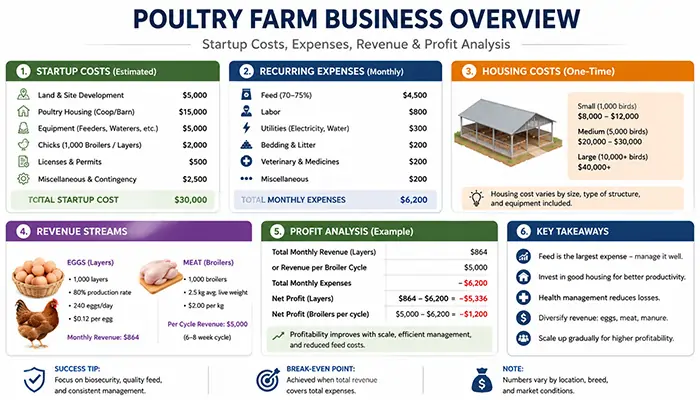
Typical Startup Costs
| Item | Estimated Cost |
|---|---|
| Chick Purchase | Moderate |
| Mobile Coop | Moderate |
| Electric Fence | Moderate |
| Feeders & Waterers | Low |
| Processing Equipment | Moderate |
| Land Preparation | Varies |
Many successful operators begin with 100–500 birds and gradually scale production.
Choosing the Right Land for Pastured Poultry
Location selection directly impacts farm performance.
Ideal Site Characteristics
Well-Drained Soil
Avoid low-lying areas prone to standing water.
Quality Pasture
Healthy grass improves forage availability and soil health.
Reliable Water Supply
Fresh water is essential for bird health and growth.
Accessibility
Easy access for equipment, feed deliveries, and customer visits improves efficiency.
Predator Control
Choose sites where fencing and monitoring can be effectively implemented.
How Much Land Do You Need?
Land requirements depend on stocking density and management practices.
A common mistake among new farmers is overcrowding birds.
Proper stocking density helps:
- Reduce disease
- Protect pasture health
- Improve bird welfare
- Increase productivity
Recommended Pasture Space
| Flock Size | Recommended Pasture Area |
|---|---|
| 100 Birds | 4,000–10,000 sq ft |
| 500 Birds | 20,000–50,000 sq ft |
| 1,000 Birds | 40,000–100,000 sq ft |
Rotational grazing allows land recovery between grazing periods and supports long-term pasture productivity.
Selecting the Best Chicken Breeds
Not all chicken breeds perform equally well on pasture.
Best Broiler Breeds
Cornish Cross
Advantages:
- Fast growth
- Excellent feed conversion
- High meat yield
Freedom Ranger
Advantages:
- Better foraging ability
- Improved mobility
- Strong pasture performance
Best Layer Breeds
Rhode Island Red
Known for:
- Excellent egg production
- Adaptability
- Hardiness
ISA Brown
Popular among commercial egg producers due to consistent laying performance.
Heritage Breeds
Heritage breeds often appeal to niche markets seeking traditional poultry genetics and superior flavor.
Designing a Pasture-Raised Chicken Coop
Housing plays a critical role in bird health and productivity.
The ideal pasture-raised chicken coop should provide:
- Ventilation
- Weather protection
- Predator resistance
- Mobility
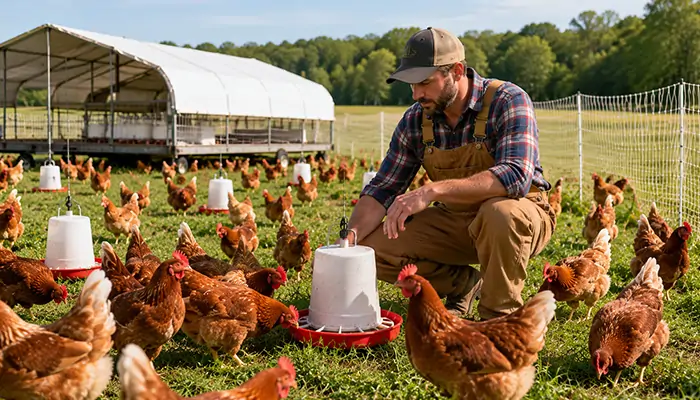
Mobile Chicken Tractors
Chicken tractors are movable shelters designed to follow rotational grazing systems.
Benefits include:
- Fresh pasture access
- Reduced manure buildup
- Lower parasite pressure
Skid-Based Shelters
Larger commercial operations often use skid-mounted shelters moved with tractors.
Permanent Structures
Permanent housing may be suitable when combined with rotational paddocks.
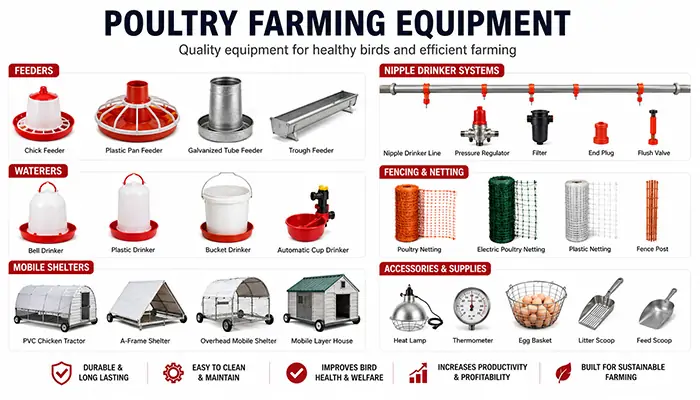
Essential Equipment for Raising Chickens on Pasture
Efficient operations require reliable equipment.
Portable Feeders
Reduce feed waste and improve labor efficiency.
Automatic Water Systems
Consistent water availability supports bird growth.
Electric Poultry Fencing
Portable electric fencing helps control predators and grazing areas.
Shade Structures
Shade reduces heat stress during summer.
Livestock Guardian Animals
Dogs, llamas, and other guardian animals can deter predators.
What Do Pasture-Raised Chickens Eat?
A common misconception is that chickens can survive entirely on grass.
In reality, pasture serves as a nutritional supplement rather than a complete diet.
Natural Foraging
Pastured chickens consume:
- Grass
- Seeds
- Insects
- Worms
- Small plants
Supplemental Feed
Commercial poultry feed remains essential for:
- Protein requirements
- Energy intake
- Balanced nutrition
Seasonal Feeding Considerations
During winter or drought conditions, forage availability declines, increasing reliance on supplemental feed.
A balanced feeding program is critical for achieving optimal growth rates and egg production.
Daily Management of a Pastured Poultry Farm
Consistent management practices determine long-term success.
Daily Tasks
Check Feed Supplies
Ensure adequate feed availability.
Monitor Water Systems
Clean water should always be accessible.
Move Housing
Many mobile systems require daily relocation.
Inspect Flock Health
Early detection prevents major losses.
Record Data
Track:
- Feed consumption
- Mortality
- Growth rates
- Egg production
Good recordkeeping supports profitability and future planning.
Preventing Common Health and Predator Problems
Pastured poultry generally experiences fewer disease issues than confinement systems.
However, challenges still exist.
Common Health Risks
- Coccidiosis
- Internal parasites
- Respiratory diseases
- Heat stress
Predator Threats
Common predators include:
- Coyotes
- Foxes
- Raccoons
- Hawks
- Owls
Prevention Strategies
- Portable electric fencing
- Secure nighttime housing
- Guardian animals
- Regular monitoring
Marketing Your Pasture-Raised Poultry Products
Production is only half the business.
Successful farmers focus heavily on marketing.
Direct-to-Consumer Sales
Many poultry producers achieve higher margins through:
- Farmers markets
- Farm stores
- Online sales
- CSA programs
Restaurant Partnerships
Local restaurants increasingly seek premium pasture-raised poultry products.
Retail Opportunities
Health food stores and specialty grocers often pay premium prices for locally raised poultry.
Building a Strong Brand
Effective branding should emphasize:
- Animal welfare
- Sustainability
- Local production
- Product quality
Step-by-Step Guide to Establishing a Poultry Farm
Step 1: Conduct Market Research
Identify customer demand and competitors.
Step 2: Develop a Business Plan
Estimate costs, revenue, and growth targets.
Step 3: Secure Suitable Land
Choose well-drained pasture with reliable water access.
Step 4: Build Infrastructure
Install:
- Coops
- Fencing
- Water systems
Step 5: Purchase Chicks
Select breeds aligned with your goals.
Step 6: Implement Rotational Grazing
Move birds regularly to maintain pasture quality.
Step 7: Develop Marketing Channels
Build customer relationships before processing birds.
Step 8: Scale Strategically
Expand only after establishing efficient systems.
Common Mistakes New Chicken Farmers Should Avoid
Many beginners encounter similar challenges.
Overstocking Pasture
Excessive bird density damages pasture and increases disease risk.
Poor Predator Management
Predator losses can quickly eliminate profits.
Ignoring Cash Flow
Seasonal production requires careful financial planning.
Inadequate Recordkeeping
Without accurate data, improvement becomes difficult.
Scaling Too Quickly
Rapid expansion often creates operational inefficiencies.
FAQ
How many chickens can I raise per acre?
The answer depends on management practices, pasture quality, and rotation frequency. Many farms successfully raise several hundred birds per acre through rotational grazing.
Is pasture-raised poultry more profitable?
Premium pricing often improves profitability when supported by effective marketing.
What is the best breed for pasture production?
Freedom Rangers and Cornish Cross remain popular meat bird options, while Rhode Island Reds perform well for egg production.
How often should chicken tractors be moved?
Most producers move tractors daily to provide fresh forage and maintain pasture quality.
Can pasture-raised poultry be certified organic?
Yes, provided the operation complies with applicable organic certification standards.
Conclusion
Establishing a small-scale pastured poultry operation offers a practical path into livestock farming while meeting growing consumer demand for sustainable food production.
Success depends on selecting suitable land, designing efficient housing, implementing rotational grazing, maintaining flock health, and building strong marketing channels.
For farmers seeking a scalable agricultural enterprise with relatively low startup costs and strong market demand, pasture-raised poultry remains one of the most promising opportunities in modern agriculture.
By focusing on proper planning and management from the beginning, you can build a productive and profitable poultry farm that delivers value to both customers and the environment.
 EN
EN  ES
ES  FR
FR  AR
AR  PT
PT  DE
DE