
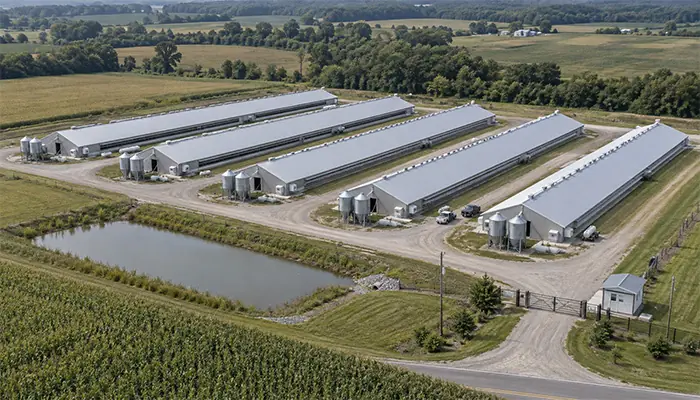
Why Poultry Farming Is So Problematic – A Complete Guide
Poultry farming becomes problematic when the demands of birds, workers, the surrounding environment, and the business are difficult to balance. Disease outbreaks, restricted natural behaviors, manure pollution, unsafe working conditions, and unstable operating costs can all affect a farm’s performance. These problems have different causes. Some develop when housing or daily management falls short. Others relate to the limitations of a particular production system, including how much freedom birds have to move and express natural behaviors. For commercial poultry farmers,
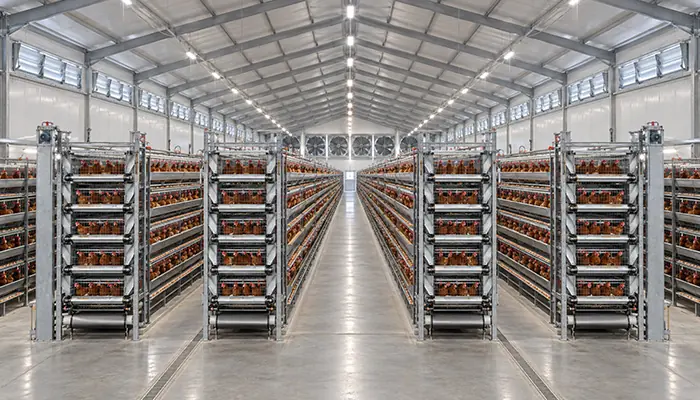
What Should Be Inside a Chicken Coop? An Easy, Complete Guide
A well-designed chicken coop should contain secure roosting space, comfortable nesting boxes, suitable flooring or litter, clean feeders and drinkers, effective ventilation, safe lighting, predator protection and easy-to-clean surfaces. The exact chicken coop setup depends on the birds’ age, flock size, climate and production purpose. For a few backyard hens, these essentials may fit inside a compact wooden coop. A commercial layer farm needs a more systematic layout with feeding, drinking, egg collection, manure handling and environmental-control equipment. In both
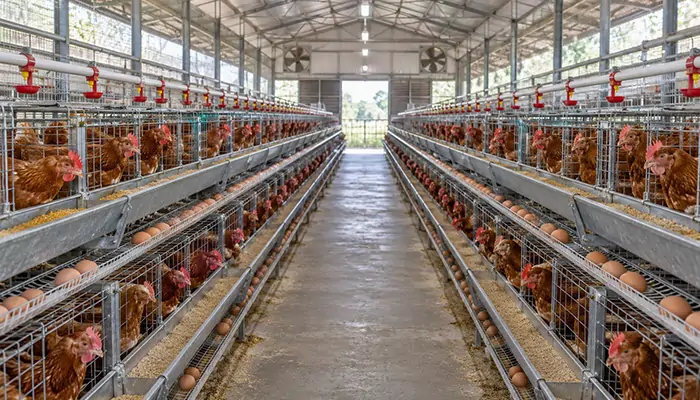
Everything You Should Know About Battery Cages: A Complete Guide
Battery cages are widely associated with commercial egg production. For poultry farm owners and equipment buyers, choosing a system requires more than comparing bird capacity. Cage design, house conditions, animal welfare requirements, and operating costs all affect the decision. What Are Battery Cages? Battery cages are adjoining enclosures arranged in rows and often multiple tiers to house chickens, particularly laying hens. “Battery” describes the grouped arrangement, not a power source. A battery hen is a hen kept in this housing
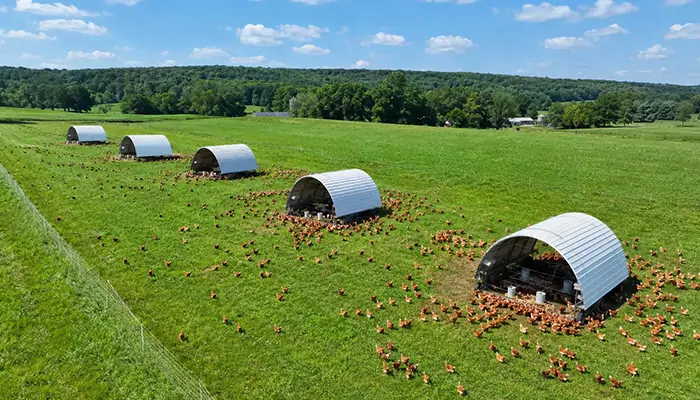
Complete Guide to Establishing a Small -Scale, Pastured Poultry Operation
Consumer demand for ethically raised poultry products has grown significantly over the last decade. More consumers are actively seeking pasture-raised chicken and eggs because they value animal welfare, sustainability, and product quality. As a result, small-scale pastured poultry farming has become an attractive opportunity for new farmers, homesteaders, and agricultural entrepreneurs. Unlike conventional poultry production systems, pastured poultry allows chickens to access fresh grass, insects, and sunlight while reducing dependence on intensive confinement facilities. With relatively low startup costs and
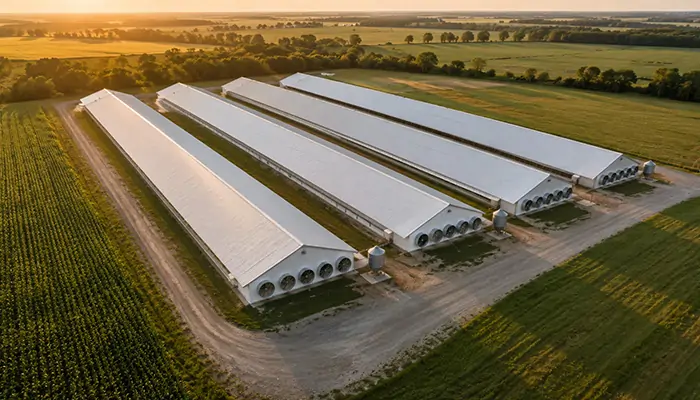
When and How to Start a Poultry Farm — A Complete Guide (2025)
The U.S. poultry industry generates over $65 billion in output annually and employs more than 300,000 workers — yet it remains one of the few agricultural sectors where a first-generation farmer can reach commercial scale within three to five years. That is not an accident. It is the result of a relatively low biological cycle (broilers reach market weight in 47 days), a well-developed contract-grower infrastructure, and steady consumer demand that has only grown with the global protein shift. But
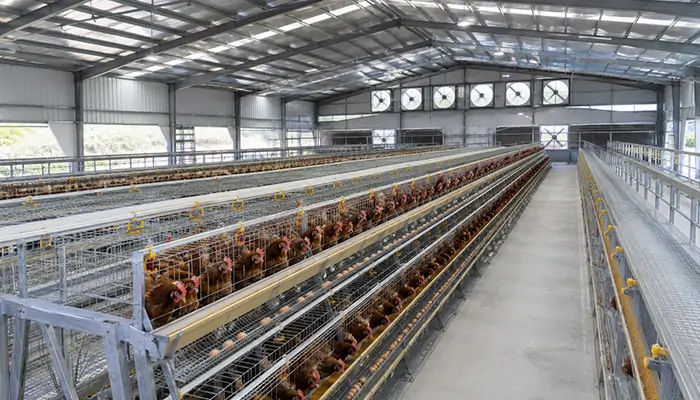
7 Factors Affecting Building a Chicken House – A Complete Guide
Building a chicken house is one of the most important investments in modern poultry farming. Whether you are planning a small poultry shed or a large commercial poultry farm, the design and construction of the poultry house directly affect: Bird health Egg production Feed conversion ratio Labor efficiency Disease control Farm profitability A poorly designed chicken house can lead to ventilation problems, heat stress, high mortality rates, and expensive maintenance costs. On the other hand, a well-planned poultry house improves
 EN
EN  ES
ES  FR
FR  AR
AR  PT
PT  DE
DE