
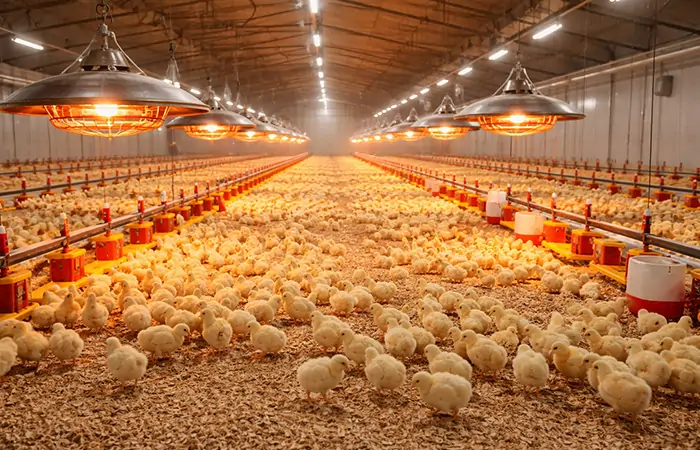
Introduction: Why Brooding Determines the Success of a Poultry Farm
In commercial poultry farming, the first 3–4 weeks of a chick’s life determine the performance of the entire production cycle. Whether you raise broilers for meat or layers for eggs, poor early management cannot be corrected later. This is why brooding in poultry is considered the foundation of profitable poultry production.
High early mortality, uneven flock growth, poor feed conversion, weak immunity, and long-term production losses are often traced back to improper brooding conditions. Professional farms understand that investing in proper brooding systems and management is not an expense—it is a long-term profit strategy.
What Is Brooding in Poultry?
Brooding Meaning in Poultry Farming
Brooding refers to the special care and environmental management provided to newly hatched chicks from day-old until they can regulate their own body temperature (usually up to 3–4 weeks of age).
In nature, a mother hen provides warmth, protection, and guidance. In commercial farming, this role is replaced by controlled brooding systems that maintain:
- Proper temperature
- Correct humidity
- Adequate ventilation
- Easy access to feed and water
- Protection from stress and disease
This is the true brooding meaning in poultry: creating an artificial environment that replaces the natural care of the hen.
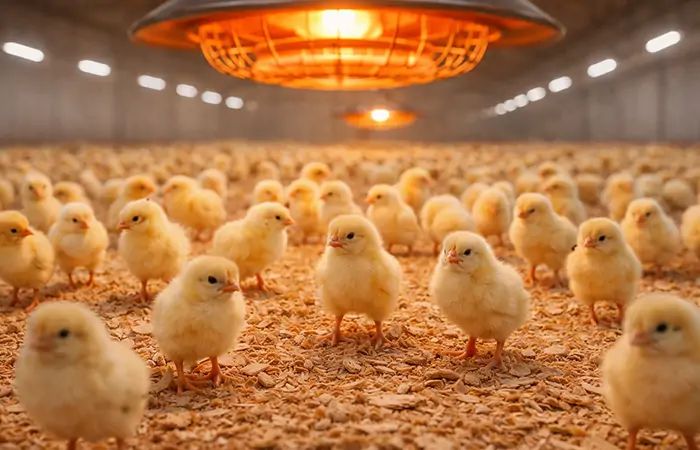
Why Newly Hatched Chicks Need Brooding
Day-old chicks:
- Cannot regulate body temperature
- Have weak immune systems
- Are highly sensitive to cold, heat, drafts, and wet litter
- Need immediate access to feed and water
- Require stable environmental conditions for organ development
Without proper brooding, chick stress begins within hours, and the effects remain visible throughout the flock’s life.
The Science Behind Brooding in Poultry
Thermoregulation in Chicks
Chicks depend entirely on external heat sources. The brooding temperature must be reduced gradually each week as the chick develops feathers and metabolic heat.
| Chick Age | Recommended Temperature |
|---|---|
| Week 1 | 32–35°C (90–95°F) |
| Week 2 | 29–32°C |
| Week 3 | 26–29°C |
| Week 4 | 23–26°C |
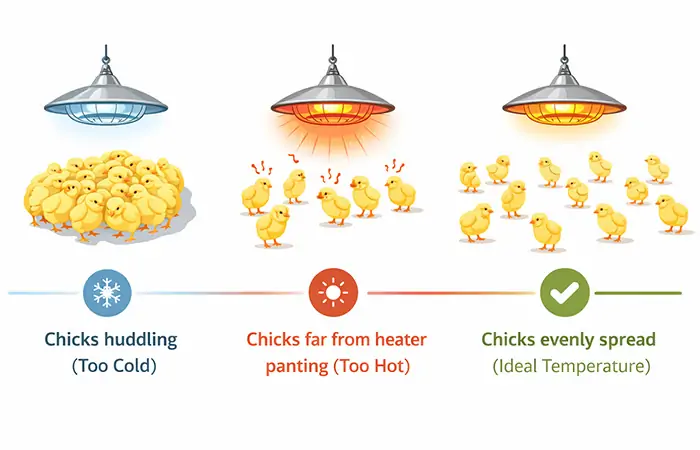
Chick behavior is the best thermometer:
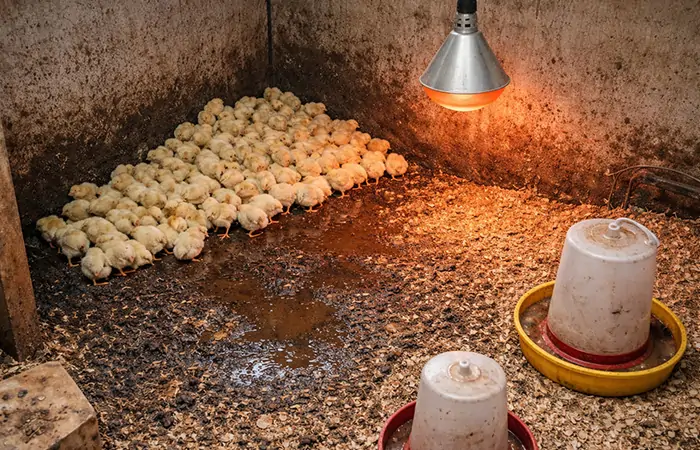
- Huddling together → Too cold
- Far from heat source, panting → Too hot
- Evenly spread → Ideal temperature
Humidity and Ventilation
Good brooding is not only about heat.
- Ideal humidity: 60–70%
- Fresh air without drafts
- Ammonia must be below 20 ppm
- Litter must remain dry
Poor ventilation causes respiratory issues and wet litter, which leads to disease outbreaks.
Brooder in Poultry: Equipment Overview
What Is a Brooder in Poultry?
A brooder in poultry is a heating device designed to provide controlled warmth for chicks during the brooding period. It replaces the heat provided by a mother hen and ensures uniform temperature distribution.
A good brooder system provides:
- Consistent radiant heat
- Wide heat coverage
- Energy efficiency
- Safe and adjustable operation
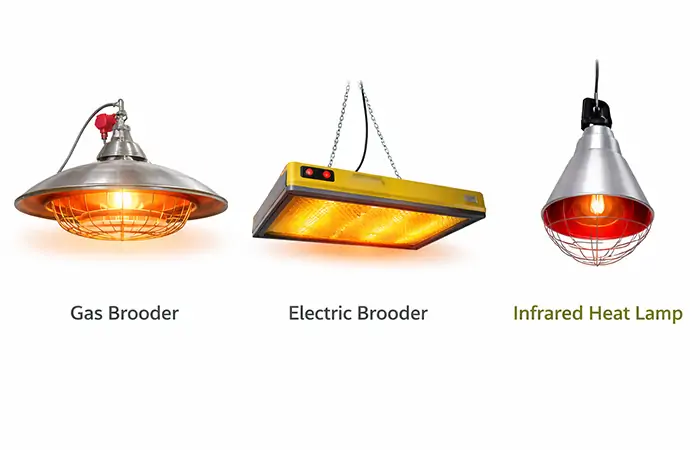
Types of Brooders Used in Commercial Farms
| Type of Brooder | Heat Source | Suitable For | Advantages | Limitations |
|---|---|---|---|---|
| Gas Brooder | LPG/Natural gas | Large farms | Uniform heat, cost-effective | Gas supply required |
| Electric Brooder | Electricity | Small–medium farms | Easy to control | High power cost |
| Infrared Lamp | Electricity | Small batches | Cheap, simple | Uneven heat, fire risk |
| Radiant Heater | Gas/Electric | Commercial houses | Wide coverage | Initial cost |
| Coal/Charcoal | Solid fuel | Rural farms | Low cost | Poor control, smoke |
How to Choose the Right Brooder for Poultry Farms
When selecting a brooder for poultry, consider:
- Poultry house size
- Local climate
- Energy availability
- Flock size
- Labor skill level
- Automation requirements
For B2B farms, gas or radiant brooders are usually preferred due to uniform heating and lower long-term operating cost.
Step-by-Step Brooding Management Guide
Preparing the Brooding House Before Chick Arrival
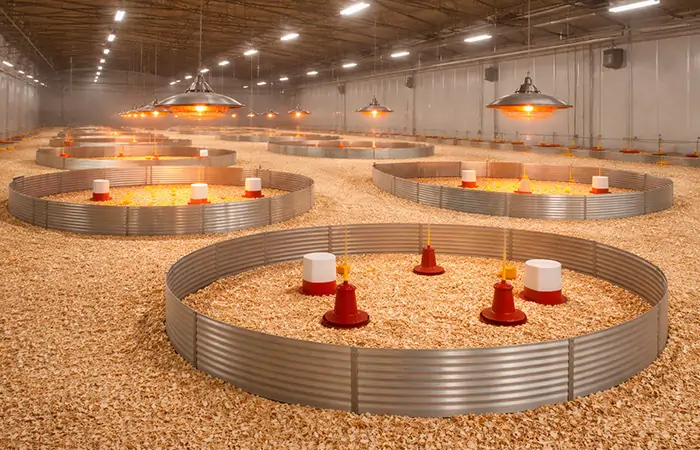
Preparation must start 48 hours before chicks arrive:
- Clean and disinfect the house
- Install bedding (wood shavings or rice husk)
- Pre-heat the house to required temperature
- Install brooder guards (circular chick area)
- Arrange feeders and drinkers
- Check ventilation system
First 24 Hours After Chick Placement
This is the most critical period.
- Provide warm water with glucose/vitamins
- Ensure chicks find water within 2 hours
- Scatter starter feed on paper
- Observe chick distribution around brooder
Feeding and Watering During Brooding
- Use high-quality starter feed (20–22% protein for broilers)
- Keep feeders and drinkers close to heat source
- Clean water at all times
- Increase feeder space weekly
Common Brooding Mistakes and How to Avoid Them
| Mistake | Consequence | Solution |
|---|---|---|
| Incorrect temperature | Mortality, stress | Monitor chick behavior |
| Overcrowding | Uneven growth | Follow stocking density |
| Poor ventilation | Respiratory disease | Ensure airflow |
| Wet litter | Bacterial growth | Keep bedding dry |
| Uneven heat | Chick piling | Use quality brooders |
Most chick losses occur due to management errors, not disease.
Brooding for Broilers vs Layers
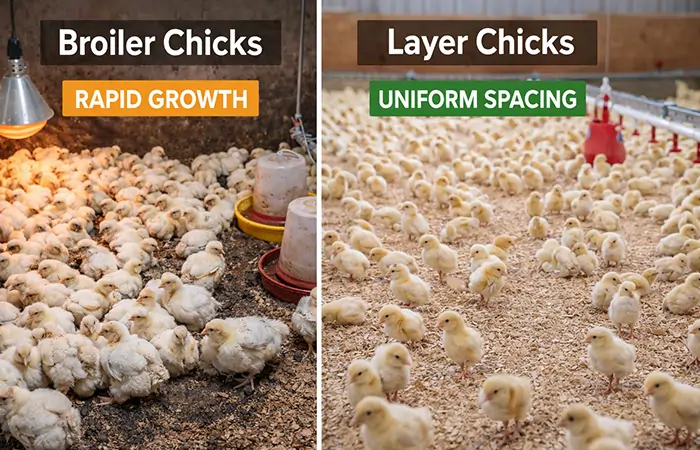
Brooding for Broiler Chickens
Broilers grow very fast. Poor brooding leads to:
- Poor weight gain
- Weak legs
- High FCR (feed conversion ratio)
- Increased mortality
Early weight gain during brooding directly affects final market weight.
Brooding for Layer Chickens
Layers require:
- Strong skeletal development
- Uniform body weight
- Proper organ formation for egg production
Improper brooding results in poor egg-laying performance months later.
Modern Innovations in Poultry Brooding Systems
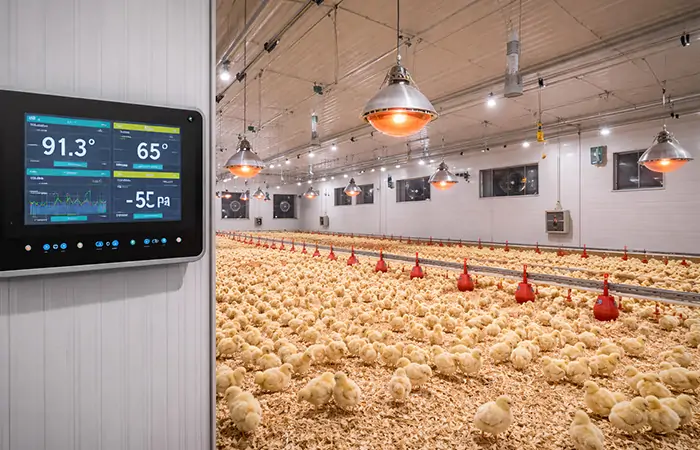
Advanced poultry farms now use:
- Automatic temperature sensors
- Climate control panels
- Energy-efficient radiant brooders
- Smart ventilation systems
- Environmental monitoring alarms
These systems reduce labor and improve chick survival rate significantly.
Cost Analysis of Brooding in Poultry Farming
Investing in proper brooding reduces long-term losses.
| Cost Factor | Poor Brooding | Proper Brooding |
|---|---|---|
| Chick mortality | High | Very low |
| Feed efficiency | Poor | Optimal |
| Growth uniformity | Uneven | Uniform |
| Labor | High | Lower |
| Profitability | Reduced | Increased |
A good brooder system pays for itself within a few production cycles.
Conclusion: Brooding Is the Foundation of Poultry Profitability
Brooding is not just an early-stage activity—it is the most critical management period in poultry farming. Proper understanding of what is brooding in poultry, selecting the correct brooder for poultry, and following scientific brooding management practices directly determine flock health, growth rate, and farm profitability.
For commercial poultry farms, investing in professional brooding equipment and management is the first step toward consistent production success.
 EN
EN  ES
ES  FR
FR  AR
AR  PT
PT  DE
DE