
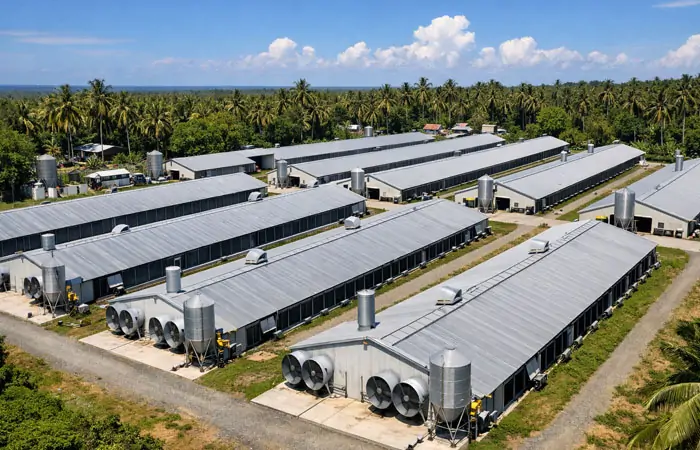
The poultry industry in the Philippines is growing rapidly due to rising demand for chicken meat and eggs. For entrepreneurs and investors, starting a poultry business in the Philippines can be a profitable and scalable agricultural venture.
However, modern poultry farming is no longer a simple backyard activity. It requires planning, proper poultry house design, reliable equipment, and professional management.
This guide explains everything you need to know to start a successful poultry farming business.
Overview of the Poultry Industry in the Philippines
The poultry industry in the Philippines plays a major role in national food supply. Chicken and eggs are among the most affordable protein sources, leading to steady market demand.
Key trends include:
-
Expansion of commercial chicken farms
-
Increasing adoption of automated poultry systems
-
Growth of both broiler chicken production and layer egg production
-
Strong market for local and regional distribution
Compared with other livestock sectors, poultry farming offers:
-
Faster production cycles
-
Lower land requirements
-
Quicker return on investment
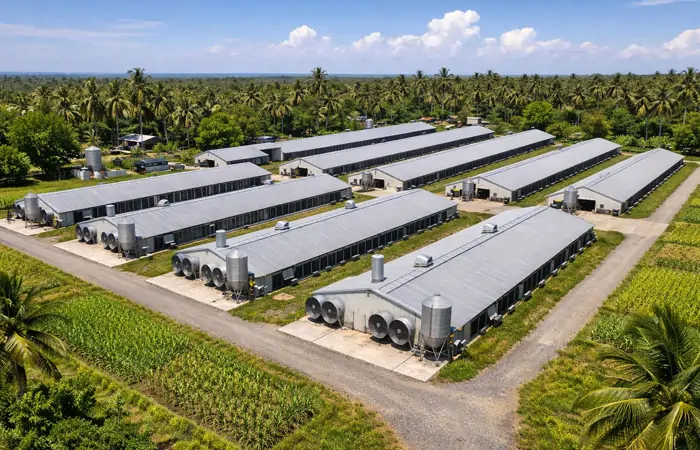
What Is a Poultry Business?
A poultry business is a commercial operation that raises birds such as chickens for:
-
Meat production (broilers)
-
Egg production (layers)
-
Chick production (breeders)
Unlike small backyard farms, a poultry farm business focuses on efficiency, biosecurity, and market supply.
Types of Poultry Farming Businesses in the Philippines
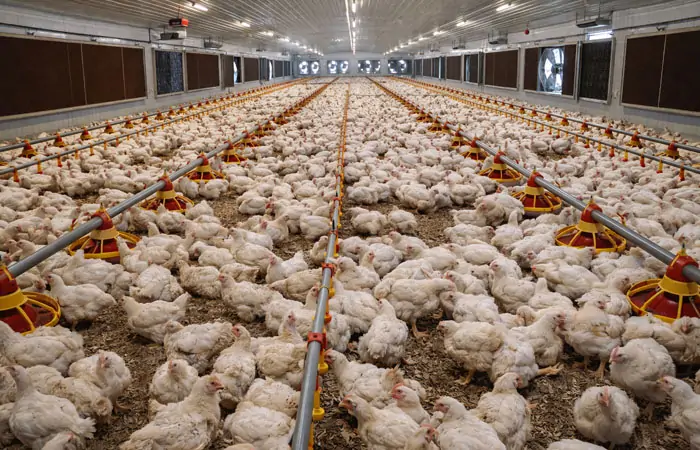
1. Broiler Farming Business
Broiler farms raise chickens for meat.
-
Growth cycle: 5–7 weeks
-
High market demand
-
Suitable for large-scale production
-
Requires strong housing and feeding systems
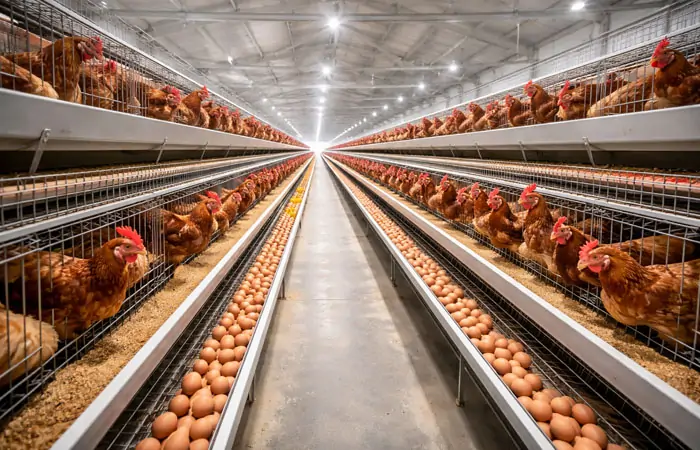
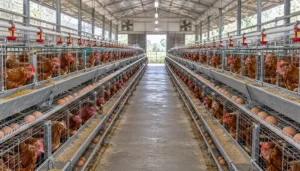
2. Layer Farming Business (Egg Production)
Layer farms raise hens for egg production.
-
Hens begin laying at about 18–20 weeks
-
Stable daily income from egg sales
-
Requires egg collection and manure management systems
3. Mini Poultry Farm vs Commercial Poultry Farm
| Mini Poultry Farm | Commercial Poultry Farm |
|---|---|
| Few birds | Thousands of birds |
| Manual operation | Automated systems |
| Local sales | Large market supply |
| Low investment | Professional investment |
Step-by-Step Guide to Start a Poultry Business in the Philippines
Step 1 – Conduct Market Research
Identify:
-
Local demand for chicken or eggs
-
Buyers such as wholesalers, supermarkets, and restaurants
-
Price trends
Step 2 – Choose Farm Type
Decide whether to focus on:
-
Broiler chicken production, or
-
Layer egg production
Step 3 – Select a Suitable Farm Location
Your poultry farm should have:
-
Good road access
-
Clean water supply
-
Reliable electricity
-
Distance from residential areas for biosecurity
Step 4 – Poultry Farm Design & Chicken House Construction
Proper chicken house design in the Philippines is crucial.
Key elements include:
-
Ventilation system
-
Lighting system
-
Space planning
-
Manure removal setup
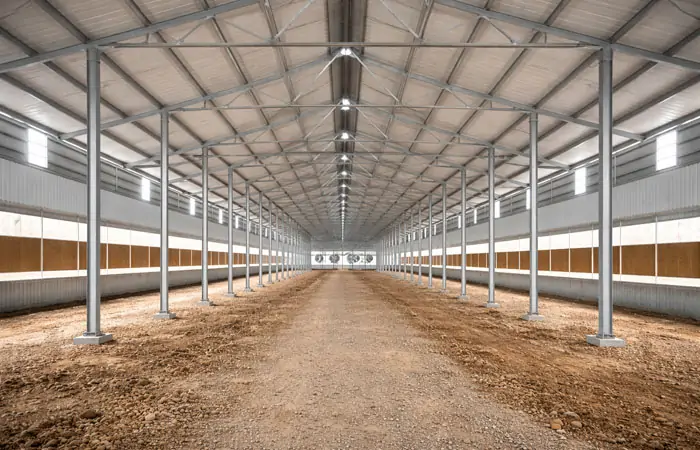
A well-designed poultry house improves bird health and productivity.
Step 5 – Install Poultry Equipment
Modern farms rely on integrated systems such as:
-
Automatic feeding system
-
Automatic drinking system
-
Manure removal system
-
Environmental control system
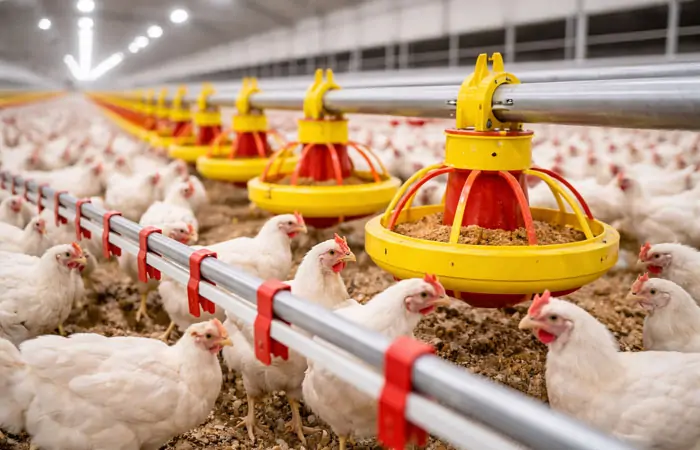
These reduce labor and improve consistency.
Step 6 – Implement Biosecurity and Health Management
Biosecurity prevents disease outbreaks.
-
Control farm access
-
Disinfect equipment
-
Monitor bird health regularly
Poultry Farming Business Plan Structure
A simple poultry farming business plan includes:
-
Initial investment cost (land, building, equipment)
-
Operating cost (feed, labor, electricity)
-
Production capacity
-
Revenue projection
-
Risk management
This helps determine profitability and attract financing.
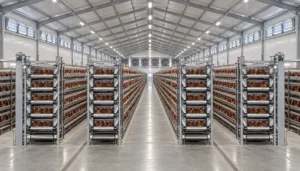
Layer Poultry Farm Layout & Design
A good layer poultry farm layout should ensure:
-
Efficient cage arrangement
-
Easy egg collection
-
Proper ventilation flow
-
Convenient manure removal
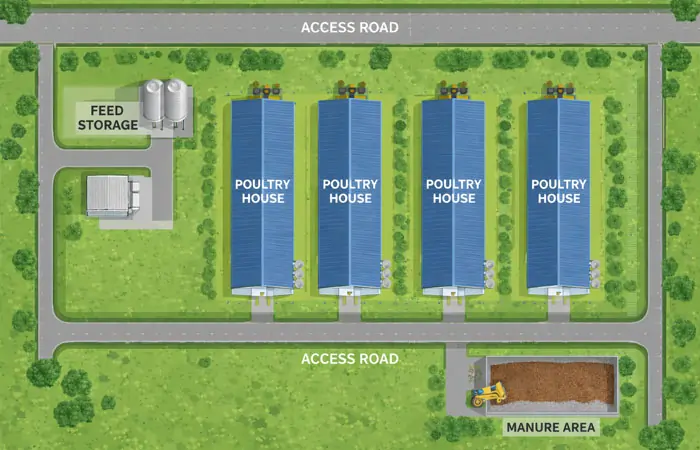
Professional design increases production efficiency.
Poultry Production Process
The general poultry production flow:
-
Day-old chicks arrival
-
Feeding and growth
-
Health monitoring
-
Egg production or broiler harvesting
-
Market distribution
Challenges of Poultry Farming in the Philippines
Common challenges include:
-
Disease outbreaks
-
Feed cost fluctuations
-
Extreme weather conditions
Modern housing and equipment help minimize these risks.
Why Modern Poultry Farms Use Automation
Automation is key for commercial success:
-
Automatic feeding ensures uniform growth
-
Automatic drinking keeps birds hydrated
-
Automatic manure removal improves hygiene
-
Smart control systems regulate temperature and airflow
Automation improves productivity while reducing labor dependency.
FAQs
Is poultry farming profitable in the Philippines?
Yes, with proper management and market access, poultry farming can be highly profitable.
What is poultry raising?
It refers to breeding and managing birds for meat or egg production.
How many chickens do I need to start?
Small farms may start with a few hundred birds, while commercial farms operate thousands.
Conclusion
Starting a poultry business in the Philippines requires planning, proper farm design, and modern equipment. As demand for chicken and eggs continues to grow, professional poultry farming offers long-term opportunities.
Planning to Build a Poultry Farm in the Philippines?
A successful poultry project depends on:
-
Durable poultry house structures
-
Efficient cage systems
-
Automatic feeding and drinking
-
Smart environmental control
Working with an experienced poultry equipment and farm solution provider ensures higher efficiency, better bird health, and long-term profitability.
 EN
EN  ES
ES  FR
FR  AR
AR  PT
PT  DE
DE