
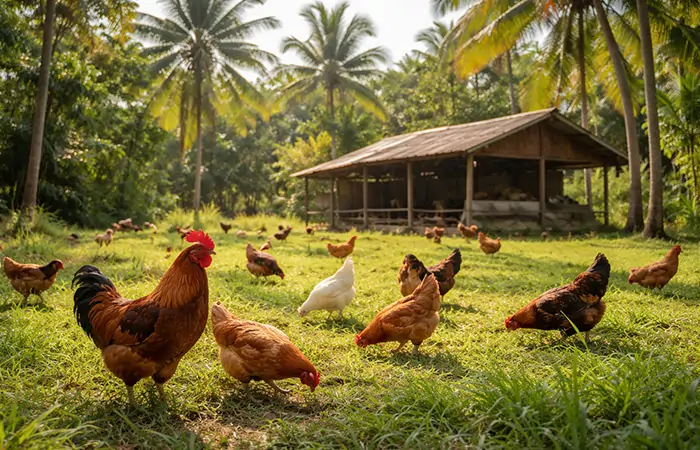
In recent years, demand for free-range and organic chicken has risen sharply across the Philippines. Consumers are increasingly concerned about food safety, animal welfare, and meat quality—driving farmers to explore alternatives to intensive cage systems.
For poultry raisers, free-range chicken farming offers a practical, profitable, and sustainable production model well suited to the Philippine climate. With abundant land, warm weather, and strong local market demand for native and organic chicken, this system is becoming a preferred choice for small and medium poultry farms.
This guide explains the benefits, production system, farm layout, equipment, and profit potential of free-range chicken farming in the Philippines.
What Is Free-Range Chicken Farming?
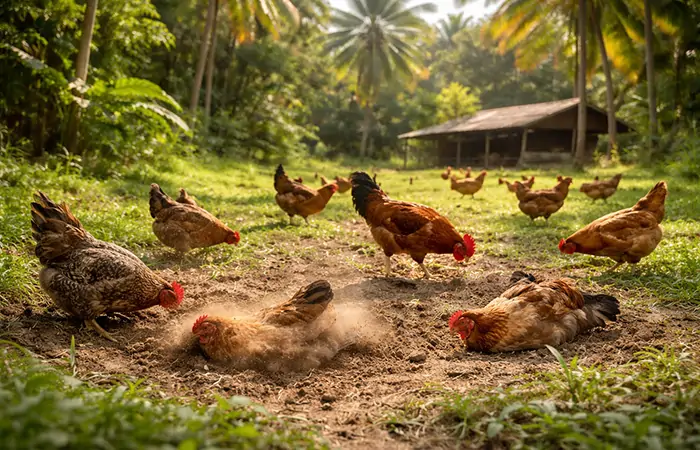
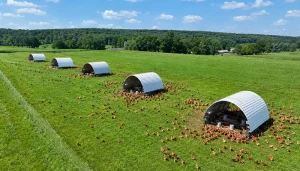
A free-range system in poultry allows chickens access to outdoor spaces where they can walk, forage, dust-bathe, and exhibit natural behaviors during the day, while returning to a protected shelter at night.
It differs from:
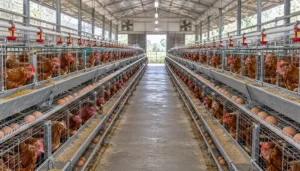
- Cage systems – birds confined in cages
- Cage-free indoor systems – birds move indoors but lack outdoor access
- Free-range systems – birds access natural outdoor range daily
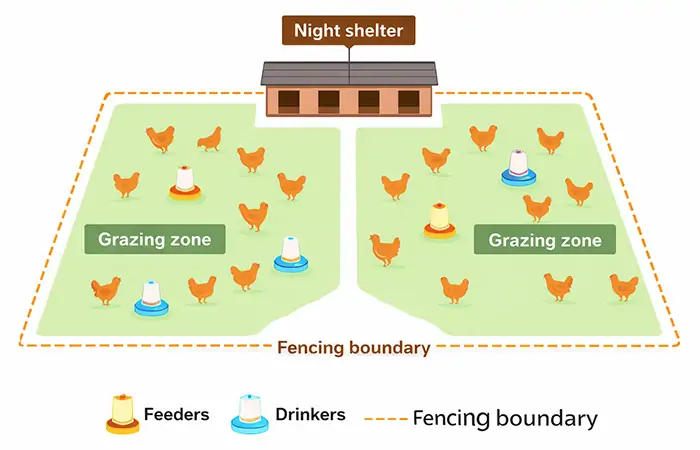
A typical free-range chicken farm includes:
- Night shelter or house
- Grazing and roaming area
- Fencing protection
- Feeding and watering points
Why Free-Range Chicken Farming Is Growing in the Philippines
Climate suitability
The tropical climate allows year-round outdoor activity without expensive climate control systems.
Market demand
Filipino consumers prefer native chicken and are willing to pay premium prices for free-range and organic poultry.
Price advantage
Free-range chickens often sell at 30–60% higher prices than conventionally raised broilers.
Lower system complexity
Compared to automated cage houses, free-range farms require less infrastructure and electricity.
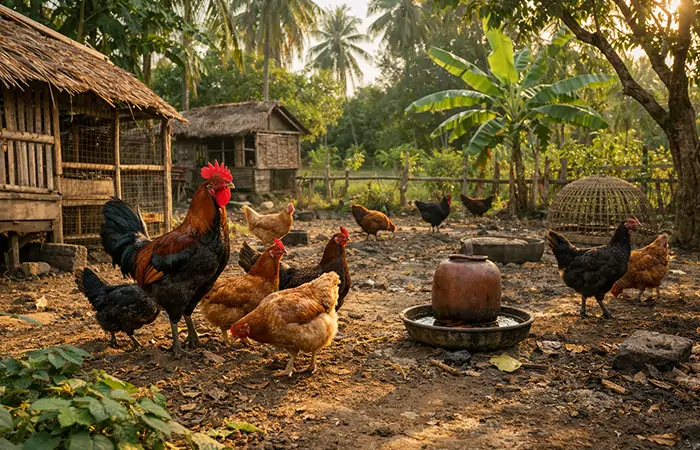
The Key Advantages of Free-Range Chickens
Healthier birds, lower stress
Access to outdoors reduces stress and improves overall bird health.
Better meat quality and taste
Exercise and natural diet improve texture and flavor, highly valued in local markets.
Reduced disease incidence
Lower stocking density and fresh air reduce disease transmission.
Less medication and antibiotics
Healthier birds mean lower veterinary costs.
Higher market value
Consumers associate free-range with organic, safe, and premium quality.
Free-Range Chicken Production System Explained
A proper free-range chicken production setup includes:
Land requirement
Typically 2–4 square meters per bird for effective grazing.
Night shelter design
Simple, well-ventilated housing to protect birds from rain and predators.
Fencing and predator protection
Perimeter fencing is essential to prevent losses.
Feeding and watering
Supplemental feeding stations placed strategically across the range.
Rotational grazing
Dividing land into sections and rotating birds to prevent overgrazing and disease buildup.
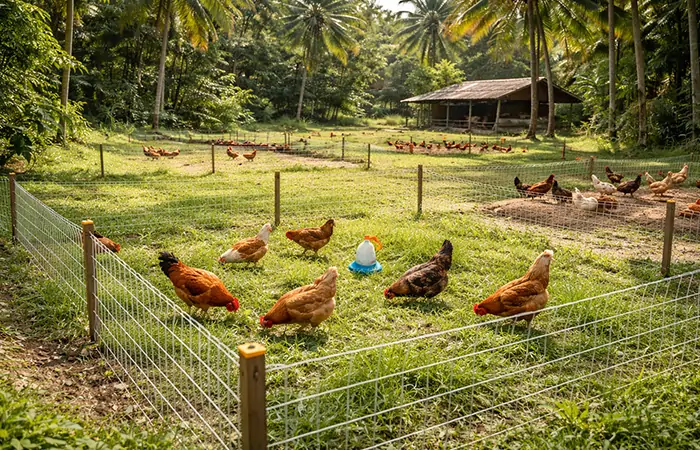
Farm Layout for a Free-Range Chicken Farm
A well-planned layout includes:
- Central night shelter
- Multiple grazing zones
- Shade from trees or artificial covers
- Proper drainage to avoid muddy conditions
- Secure perimeter fencing
This zoning ensures efficient land use and bird health.
Equipment Needed for Free-Range Poultry Farming
Essential equipment includes:
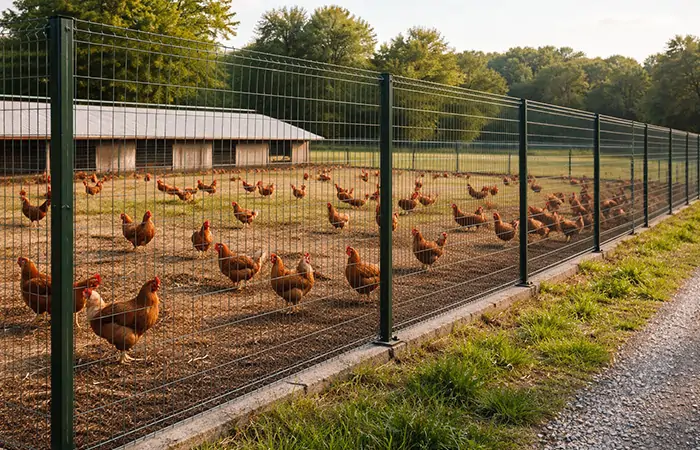
- Welded Wire Mesh fencing for perimeter protection
- Hexagonal wire netting for lightweight internal divisions
- Feeders and drinkers distributed across the field
- Simple cages or shelters for night housing
- Egg collection trays and storage
Durable wire mesh fencing is especially important for preventing predator attacks and keeping birds within the range.
Cost vs Profit of Free-Range Chicken Farming in the Philippines
Initial investment
Lower than intensive cage systems. Major costs include fencing, shelter, and land preparation.
Operating cost
Reduced electricity, ventilation, and medication expenses.
Selling price
Free-range chickens command premium pricing in wet markets, restaurants, and organic stores.
Return on investment
Many farms achieve profitability within the first few production cycles due to higher margins.
Common Challenges and How to Solve Them
| Challenge | Solution |
|---|---|
| Predators | Strong wire mesh perimeter fencing |
| Weather exposure | Provide shaded areas and proper shelter |
| Disease control | Rotational grazing and clean water |
| Land management | Divide pasture into sections |
Free-Range vs Conventional Poultry Farming
| Factor | Free-Range | Conventional Cage |
|---|---|---|
| Bird welfare | High | Low |
| Meat quality | Premium | Standard |
| Investment | Moderate | High |
| Market price | High | Low |
| Electricity need | Low | High |
Is Free-Range Chicken Farming Right for You?
This system is ideal for:
- Small to medium landowners
- Farmers targeting organic and native chicken markets
- Poultry raisers seeking lower operational costs
- Farms located in rural or semi-rural areas
It is also highly scalable as demand grows.
Conclusion
Free-range chicken farming is not only a humane and sustainable method but also a profitable poultry production model perfectly suited to the Philippine environment. With proper farm layout, fencing, and management, farmers can produce healthier birds, achieve better meat quality, and earn higher returns.
For successful implementation, investing in reliable fencing, shelters, and poultry equipment is essential to protect birds and maintain an efficient free-range system.
 EN
EN  ES
ES  FR
FR  AR
AR  PT
PT  DE
DE