
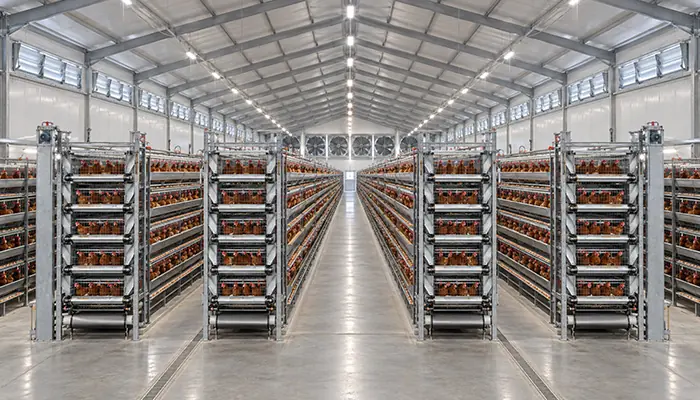
A well-designed chicken coop should contain secure roosting space, comfortable nesting boxes, suitable flooring or litter, clean feeders and drinkers, effective ventilation, safe lighting, predator protection and easy-to-clean surfaces. The exact chicken coop setup depends on the birds’ age, flock size, climate and production purpose.
For a few backyard hens, these essentials may fit inside a compact wooden coop. A commercial layer farm needs a more systematic layout with feeding, drinking, egg collection, manure handling and environmental-control equipment. In both cases, the goal is the same: create a dry, safe and manageable environment where the birds can rest, eat, drink and lay eggs.
This guide explains what should be inside a chicken coop, where each item should be placed and how to adapt the interior for chicks, laying hens and larger poultry projects.
Table des matières
ToggleChicken Coop Essentials at a Glance
Before planning the interior chicken coop layout, use this checklist to make sure the basic functions are covered.
| Essential Item | Main Purpose | Best Position |
|---|---|---|
| Roosting bars | Provide an elevated sleeping area | Away from feeders and above nest-box level |
| Nesting boxes | Give hens a quiet place to lay eggs | In a darker, easily accessible area |
| Bedding or floor system | Controls moisture and improves hygiene | Across the usable floor area |
| Feeders | Keep feed available and reduce waste | Dry area, away from roosting droppings |
| Drinkers | Supply clean water throughout the day | Easy to inspect, refill and clean |
| Ventilation | Removes heat, humidity, dust and stale air | Openings above bird level |
| Eclairage | Supports visibility and daily management | Evenly distributed and protected |
| Secure wire mesh | Stops predators and wild birds entering | Windows, vents and enclosure openings |
| Cleaning equipment | Supports litter and manure removal | Near a convenient service entrance |
| Outdoor run or activity area | Provides movement, sunlight and enrichment | Connected through a secure pop door |
A good coop does not need to be decorative. Every component should serve bird health, egg production, safety or daily management.
Start With the Basic Chicken Housing Requirements
Before adding accessories, make sure the building itself is suitable for poultry. Equipment cannot correct a coop that is consistently wet, overcrowded or difficult to ventilate.
Provide Enough Usable Space
The required coop size depends on bird size, housing system, climate and the amount of outdoor access. As a practical starting point for standard backyard hens, many keepers allow approximately 3–4 square feet (0.28–0.37 m²) of usable indoor floor area per bird, plus approximately 8–10 square feet (0.74–0.93 m²) per bird in an outdoor run. Large breeds, birds kept indoors for long periods and hot or humid climates may require more room.
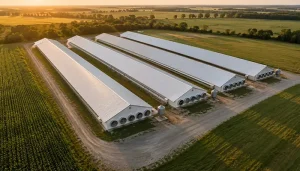
Commercial poultry houses should not be designed from a backyard rule of thumb. Stocking density, aisle width, equipment dimensions, ventilation capacity and local welfare standards must be calculated together. Our guide to poultry farm design and layout explains the wider planning process for small and commercial farms.
Keep the Coop Dry
Moisture quickly creates problems inside a chicken house. Repair roof leaks, prevent rain from entering vents, keep drinkers from overflowing and direct surface water away from the building. An elevated floor or well-designed drainage system is especially valuable in wet locations.
The floor should be firm, washable where possible and compatible with the selected bedding or manure-removal method. Damp corners and exposed soil are difficult to sanitize and can attract insects and rodents.
Make Inspection and Cleaning Easy
A chicken coop should be designed for the people who manage it as well as the birds. Doors must be wide enough for equipment and bedding removal. Feeders, drinkers and nest boxes should be reachable without stepping over obstacles. In a walk-in coop, leave a clear service path so staff can check birds, collect eggs and respond quickly to equipment problems.
1. Roosting Bars for Safe Nighttime Rest
Chickens naturally look for an elevated place to sleep. Stable roosting bars help them settle at night and keep them away from damp litter. For standard adult hens, allow roughly 8–10 inches (20–25 cm) of linear perch space per bird; heavier breeds may need more.
Wooden bars with smooth, rounded edges provide a secure grip in small coops. Avoid sharp metal edges, splintered timber and slippery round pipes. A perch should be strong enough to carry the combined weight of several birds without bending.
Place roosting bars higher than the nest boxes so hens are less likely to sleep in the nests. However, do not position them directly above feeders, drinkers or egg-laying areas. Leave enough space between the roost and wall for the birds to balance comfortably. If several bars are installed, arrange them so birds on a lower perch are not directly beneath those above.
Adding a removable droppings board below the roost can make a small chicken coop easier to clean.
2. Nesting Boxes for Laying Hens
A chicken coop for laying hens needs a quiet, clean and slightly darker egg-laying area. A common starting ratio is one nest box for every four or five hens, although flock behavior and nest design can affect usage. Hens frequently choose the same preferred boxes, so inspection is more useful than simply installing a large number of nests.
Mount the boxes lower than the main roosts and away from busy entrances. They should be easy for hens to enter but also easy for workers to inspect and clean. Add clean nesting material or a washable nest pad to reduce cracked and dirty eggs.
For larger egg-production farms, individual wooden boxes are not always efficient. Purpose-designed layer housing can combine feeding, drinking, egg collection and manure handling in one organized system. An A-type layer cage system is often suitable where a stable, accessible three- or four-tier layout is preferred. For intensive projects requiring higher stocking capacity and automation, an H-type layer cage system can use building space more efficiently.
3. Suitable Bedding or a Purpose-Designed Floor
What should you put on the bottom of a chicken coop? The right answer depends on the housing system and cleaning method.
Common litter materials include pine shavings, chopped straw, hemp bedding and properly managed sand. The material should be dry, absorbent, reasonably low in dust and safe for poultry. Remove wet patches promptly, especially around drinkers, and replace the litter before odor and moisture become difficult to control.
Avoid moldy straw, sharp debris and highly dusty material. Cedar shavings and strongly aromatic wood products are also poor choices for enclosed spaces. A thick layer of bedding does not compensate for leaking water lines or inadequate ventilation.
In cage-free and commercial houses, a raised floor can separate birds from manure and spilled water. A plastic poultry slatted floor system can improve drainage, support cleaner movement areas and simplify waste management when it is correctly matched to bird age and floor loading.
4. Feeders and Feed Storage
Feeders should give every bird practical access to feed while limiting spillage and contamination. In a backyard coop, a hanging feeder or raised trough can reduce scratching waste. Set it near the birds’ back height and adjust it as young chickens grow.
Do not place a feeder below a roost. Keep it away from leaking drinkers and areas where rain can enter. Remove compacted or wet feed before mold develops.
Store bagged feed in a dry, secure location. A sealed container helps prevent rodents and moisture from reaching the feed. The storage area should be convenient for workers but separated from litter, manure and chemical products.
Commercial farms may use automatic feed lines or trough systems to deliver a consistent quantity along the poultry house. Before selecting equipment, calculate bird capacity, line length, feeding points, power requirements and backup procedures.
5. Clean and Reliable Drinking Equipment
Fresh water is one of the most important chicken coop necessities. Birds must be able to reach water easily, and staff must be able to check the system every day.
Small flocks may use bell drinkers, gravity waterers or raised containers. Place them on a stable surface to prevent tipping and keep the drinking edge above the litter. In colder regions, any freeze-protection equipment must be designed and installed safely.
Nipple drinking lines are widely used in larger poultry houses because they can reduce open-water contamination and support automated supply. Correct height, pressure and flow rate are essential. A backup water plan is also important: a blocked filter, empty tank or power failure can affect the entire flock quickly.
Whatever system is used, inspect it for leaks. Constant dripping can turn a well-bedded area into a wet, unhealthy section of the coop.
6. Ventilation Without Direct Drafts
Ventilation removes moisture, heat, dust and stale air. It also helps control condensation on the roof and walls. If a coop smells strongly of ammonia, simply adding more bedding will not solve the underlying airflow or manure problem.
For a small hen coop, protected openings near the roof can release warm, moist air while avoiding a strong draft at roost level. Openings on more than one side encourage air exchange. Cover every vent and window with securely fastened, predator-resistant mesh.
Large poultry houses require ventilation designed around bird weight, climate, house dimensions and stocking density. Natural ventilation may work in suitable open-sided buildings, while enclosed houses often use fans, cooling pads, air inlets and environmental controllers. Ventilation capacity should be calculated during the building design stage, not added after birds are placed.
7. Safe Lighting and Electrical Equipment
Windows provide daylight and can assist natural ventilation, but they should not create intense heat or glare inside the coop. Positioning, shade and local climate all matter.
Artificial lighting may be needed for inspection, winter management or a controlled layer program. Use fixtures designed for dusty agricultural environments. Protect lamps, cables, switches and connections from birds, water and litter. Loose extension cords and unguarded heating lamps create avoidable fire and injury risks.
In a commercial layer house, use an evenly distributed lighting plan rather than a few bright spots. Lighting schedules should support the flock’s age and production program without disrupting normal rest.
8. Predator-Proof Doors, Windows and Mesh
A strong structure is only as secure as its weakest opening. Check doors, corners, roof gaps, vents and the base of the coop. Use reliable hinges and latches that cannot be pushed open by animals.
Traditional chicken wire can help contain birds, but its relatively large openings and light construction may not stop determined predators. Small-aperture welded mesh or hardware cloth is normally a better choice for windows, ventilation openings and vulnerable lower sections. Fasten the mesh with screws and washers or secure framing rather than relying only on light staples.
Where digging animals are a concern, extend the barrier below ground or install an outward-facing mesh apron around the perimeter. Inspect the enclosure regularly for corrosion, loose fasteners and new gaps.
9. Cleaning, Manure Handling and Biosecurity
The best chicken coop design makes routine cleaning simple. Include removable droppings boards, manure trays, slatted areas or another clear waste-management method. Keep a dedicated scraper, brush and other cleaning tools near the coop, but store disinfectants where birds cannot reach them.
Set up a basic cleaning schedule:
- Check drinkers and remove wet litter every day.
- Remove obvious manure buildup from boards and trays regularly.
- Wash feeders and drinkers before residue accumulates.
- Replace bedding according to moisture, odor and flock conditions.
- Inspect for rodents, insects, damaged mesh and blocked vents.
- Clean and disinfect the house between flocks when the production system permits.
For a larger farm, separate clean and dirty routes as much as possible. Footbaths, controlled visitor access, dedicated clothing and organized dead-bird and manure handling can reduce biosecurity risks.
10. A Secure Chicken Run or Activity Area
The coop is the protected sleeping and laying space; the run is the attached daytime activity area. A useful chicken run can include shade, a dry dust-bathing area, outdoor perches, a protected drinker and suitable ground cover.
The run should have adequate space, a secure access gate and fencing selected for local predators. In areas with aerial predators, an overhead net or covered section may be necessary. Rotate or repair heavily used ground before it becomes permanently wet and bare.
For producers moving toward alternative housing, cage-free chicken farming equipment can combine activity areas with organized feeding, drinking, nesting and floor-management systems. Equipment layout still needs to prevent crowding and allow workers to reach all parts of the house.
How to Arrange the Inside of a Chicken Coop
The interior should be divided into functional zones rather than filled wherever space is available.
A Simple Layout for a Small Backyard Coop
Put nest boxes in the quietest, darker section. Install roosting bars above nest-box height but not directly over them. Keep feeders and drinkers in a brighter, easy-to-clean zone near the service door. Position ventilation openings high on the walls. The pop door to the run should not force birds to move through the nesting area.
Leave enough clear floor space for birds to turn and move without passing through narrow bottlenecks. A small coop becomes difficult to manage when storage bins and cleaning tools occupy the birds’ usable area.
Layout for 4–6 Laying Hens
For four to six standard hens, plan the floor area from the actual internal dimensions, not the roof footprint. Provide at least two well-positioned nest boxes, sufficient linear roost space and more than one practical point of access to feed and water if competition develops. A walk-in design is easier to clean, but a compact coop can work if the roof or side panels open safely.
Layout for a Medium or Commercial Chicken House
In a larger project, begin with the production flow. Consider bird entry, feed delivery, water supply, egg movement, manure removal, staff inspection and final cleaning. Aisles must remain clear, and motors, tanks and control units need maintenance access.
Layer farms can compare different housing options through our layer poultry farm setup guide. The right choice is not based only on cage price. House dimensions, climate, labor cost, automation level and target capacity all influence the final configuration.
Adjust the Coop for Different Birds
Chicks and Pullets
Young birds need a controlled brooding environment, safe heat distribution, easy access to starter feed and water, and openings small enough to prevent escape or injury. Equipment height must change as the birds grow. Avoid deep open water containers, exposed heating elements and cold floor-level drafts.
For farms raising replacement layers, a purpose-designed cage à poussins can organize brooding, feeding and drinking while allowing the equipment to be adjusted through the pullet stage.
Laying Hens
The priorities for laying hens include nest access or egg collection, adequate feeder and drinker space, consistent lighting, strong ventilation and easy manure management. Calcium provision and balanced layer feed also support egg production, but nutritional decisions should follow the flock program and feed supplier’s recommendations.
Meat Chickens
Broilers are commonly managed in floor-based houses, so usable floor area, litter condition, ventilation and access to feed and water become central. Roosts and traditional nest boxes are not the main requirements for a standard meat flock. Broiler breeders, however, require a different breeding and egg-management layout.
Common Chicken Coop Setup Mistakes
Even an attractive coop can perform poorly if the interior is arranged incorrectly. Avoid these common mistakes:
- Overcrowding the usable floor area. Equipment, storage and nest boxes reduce the space that birds can actually use.
- Installing too little ventilation. A closed coop may feel warm but can retain moisture and stale air.
- Creating a draft at roost height. Fresh-air openings should exchange air without blowing directly on resting birds.
- Placing roosts over nests, feed or water. This causes unnecessary contamination.
- Using weak mesh on critical openings. Containment mesh is not always predator-proof mesh.
- Ignoring water leaks. A small leak can create wet litter, odor and structural damage.
- Making equipment difficult to remove. Fixed items can leave inaccessible areas where manure and pests accumulate.
- Using unsafe decorations. Loose strings, sharp edges, peeling paint and exposed cables add risk without improving housing.
- Forgetting future expansion. A layout designed for today’s flock may block additional lines, cages or ventilation equipment later.
Buying Equipment for a Poultry Project
For a backyard coop, owners can often select equipment after the building is complete. For a commercial poultry farm, the building and equipment should be planned as one system.
Before requesting a proposal, prepare the following information:
- Bird type and age
- Target number of birds
- Poultry house length, width and clear height
- Open or environmentally controlled house
- Local temperature and humidity range
- Preferred cage-free, floor or cage housing system
- Required level of feeding, drinking, egg and manure automation
- Available voltage and water supply
- Installation schedule and expansion plan
Providing these details allows a supplier to check row spacing, tier quantity, service aisles, equipment capacity and utilities before production. You can also review the full range of systèmes de cages à volaille before selecting a configuration.
Frequently Asked Questions
Do chickens need a coop?
Yes. Chickens need a protected place to rest, shelter from weather and avoid predators. Laying hens also need a suitable egg-laying area. In a commercial farm, the poultry house performs the same functions on a larger and more controlled scale.
What are the most important chicken coop essentials?
The essentials are adequate space, roosting areas, nest boxes for layers, a suitable floor or bedding, feeders, drinkers, ventilation, lighting, predator protection and a practical cleaning system.
What should be placed on the floor of a chicken coop?
Small coops commonly use dry pine shavings, chopped straw, hemp bedding or managed sand. Commercial and cage-free houses may use litter, slatted flooring or a combination of floor systems. The best option depends on drainage, manure handling, bird age and climate.
How much coop space does a chicken need?
For standard backyard hens, approximately 3–4 square feet of indoor space per bird is a common starting range, with more space in the outdoor run. This is not a universal commercial stocking standard. Breed size, climate, time spent indoors, housing system and local regulations must also be considered.
How high should a chicken coop be?
The coop must be high enough for safe roost placement, ventilation above the birds and convenient cleaning. A walk-in backyard coop is commonly built high enough for an adult to stand comfortably. Commercial house height should be calculated with the cage or floor system, ventilation design and maintenance clearance.
Can chickens be kept indoors?
Chickens can be kept in a properly designed indoor poultry house, but it must provide sufficient space, ventilation, lighting, feed, water and opportunities for appropriate movement and behavior. A garage or household room without agricultural ventilation and sanitation is not a suitable permanent chicken house.
What is the difference between a coop, run and pen?
A coop is the sheltered building used for resting, laying and protection. A run is usually an attached outdoor exercise area. A pen is a more general enclosed space and may or may not include a roof or sheltered house.
What should be inside a chicken coop for laying eggs?
A layer coop needs clean nesting areas or an egg-collection system, suitable roosting or housing space, layer feeders, dependable drinkers, good ventilation, controlled lighting and efficient manure removal. Equipment should be matched to the flock size and production model.
Final Chicken Coop Checklist
Before placing birds, confirm that the coop has:
- Enough usable space for the planned flock
- A dry, stable floor or suitable slatted system
- Safe roosts for birds that require them
- Clean nesting or egg-collection areas for layers
- Accessible feeders and reliable drinkers
- Ventilation without direct drafts
- Protected lighting and electrical equipment
- Secure doors, windows and predator-resistant mesh
- A practical cleaning and manure-management plan
- Safe access to an outdoor or indoor activity area where required
The best chicken coop interior is not the one with the most accessories. It is the one that keeps birds safe, supports efficient daily work and can be cleaned, inspected and expanded without disrupting the entire flock.
If you are planning a new poultry house or upgrading an existing farm, contact Sheedoz Poultry with your house dimensions, bird type, target capacity and preferred automation level. Our team can help you compare suitable housing, feeding, drinking, egg collection and manure-removal solutions.
 FR
FR  EN
EN  ES
ES  AR
AR  PT
PT  DE
DE